Cambodia is mounting an aggressive push to attract South Korean capital into advanced manufacturing and technology sectors, signalling a decisive shift away from decades of dependence on garment production and low-wage assembly work. Deputy Prime Minister Sun Chanthol spearheaded the initiative during an investment promotion mission to South Korea in mid-June, where he led a delegation through high-level company visits and the 2026 Incheon-Cambodia Investment Roadshow. The campaign underscores the government's recognition that sustained growth requires moving up the value chain into automotive components, electric vehicle systems, healthcare technology and digital services—sectors that promise better wages, stronger supply-chain integration and more sophisticated manufacturing capabilities for Cambodia's future workforce.
The timing of this mission is strategic. South Korea's manufacturing sector, particularly in automobiles and electronics, has already established footholds in Cambodia, creating both a foundation and a template for expansion. Daejoo KC Group, a sprawling South Korean conglomerate with divisions spanning metallurgy, chemicals, logistics, construction and energy, operates in Cambodia through two entities: Camko Motor, which assembles Hyundai vehicles for domestic consumption and produces automotive wire harnesses for export, employing roughly 500 workers; and Camko Infracore, which imports and distributes vehicles and provides after-sales services. During his visit, Chanthol encouraged the group's leadership to consider broadening its Cambodian footprint into other sectors where it already maintains operations in South Korea. Such existing operations provide Cambodia with credible leverage when pitching itself to other potential investors—evidence that the kingdom can host complex manufacturing and supply-chain operations.
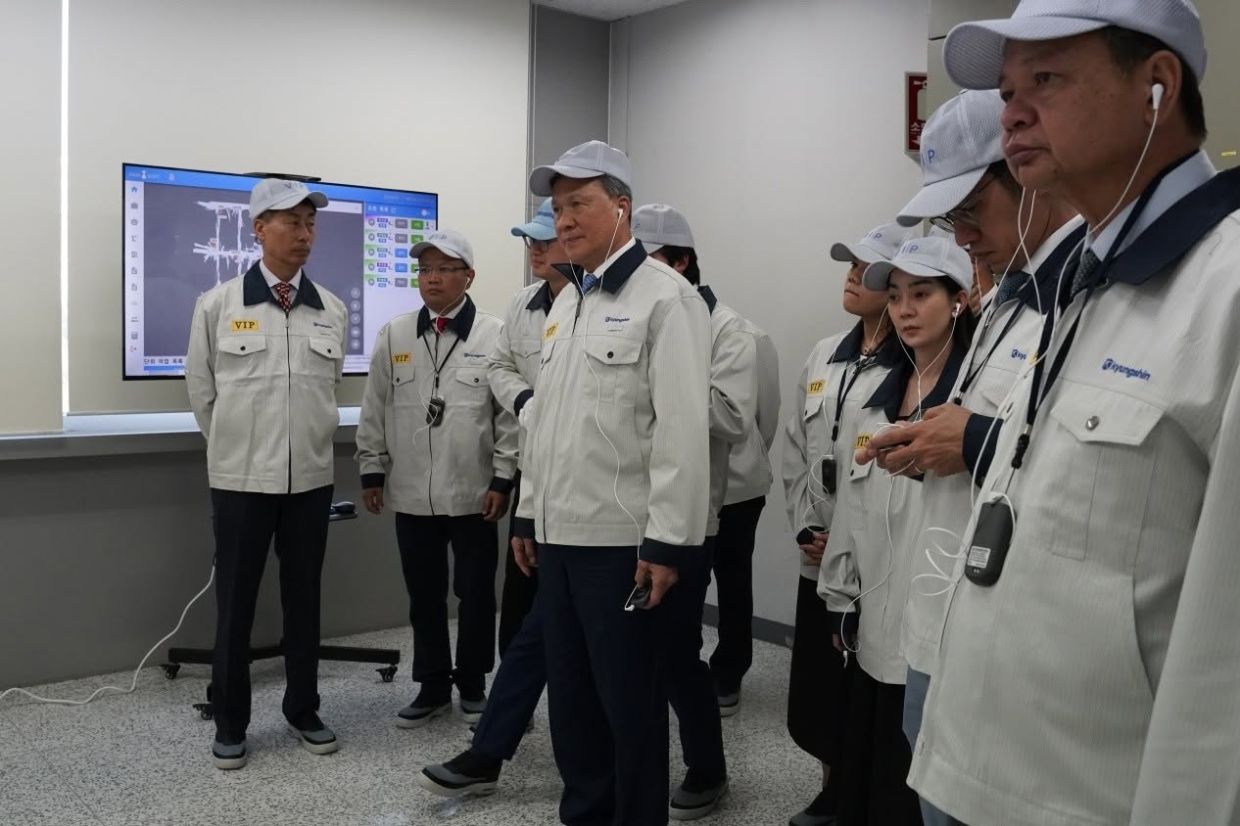
The deputy prime minister's subsequent visit to Kyungshin Co., Ltd., a leading Korean specialist in automotive electronic components and wire harness manufacturing, reinforced this message. Founded in 1974 and now a global player in EV electrical systems, connectors and advanced mobility technologies, Kyungshin has maintained a factory in Kandal province since 2012, representing approximately US$20 million in capital investment and employing 1,467 workers. This decade-long presence demonstrates that Cambodia can retain foreign manufacturers in sophisticated, labour-sensitive sectors. More importantly, it signals to Korean investors that Cambodia's regulatory environment, workforce stability and infrastructure have proven capable of supporting the kind of precision manufacturing required for automotive electronics—a sector where quality and reliability are non-negotiable. As global automakers accelerate the transition to electric vehicles, such supply-chain positions become increasingly valuable, offering Cambodia a platform to deepen regional integration and capture higher margins than traditional garment production allows.
The investment roadshow itself drew representatives from major Korean firms and was structured as a comprehensive pitch of Cambodia's reformed business environment. Government officials, including representatives from the Council for the Development of Cambodia, the Ministry of Commerce, and the Cambodian ambassador to South Korea, collectively framed the message: Cambodia under its revised investment law offers incentive packages, favourable fiscal treatment, macroeconomic stability and robust investor protections. This coordinated diplomatic and commercial approach—uniting government agencies, chambers of commerce and business associations—reflects Phnom Penh's seriousness about competing for regional manufacturing investment at a moment when companies worldwide are reassessing supply-chain geography and seeking alternatives to established Asian hubs.
Yet the mission extended beyond factories and production floors. Chanthol's visit to Incheon Baek Hospital marked a significant departure from conventional industrial promotion, reflecting Cambodia's ambition to attract not just manufacturing investment but also high-end services and technology transfer. The deputy prime minister explicitly identified healthcare and the development of international-standard medical facilities as government priorities, requesting that the hospital consider providing technical assistance, training programmes and knowledge exchange with Cambodian medical specialists. This dimension reveals that Cambodia's economic diversification strategy encompasses more than supply-chain manufacturing; it targets capability-building in services sectors where Cambodia currently lags far behind developed Asian neighbours. Healthcare technology, digital management systems and medical training represent growth areas where Cambodia can simultaneously upgrade public welfare and create premium employment opportunities for educated workers.
The broader context for this investment push is Cambodia's lingering dependence on garment and footwear sectors, which, while remaining crucial sources of employment and export revenue, face structural challenges. Global labour-cost competition from Vietnam, Bangladesh and other low-wage countries, combined with increasing automation and shifting consumer preferences toward nearshoring, has made Cambodia's traditional manufacturing base vulnerable. Policymakers have long recognized this vulnerability, but the recent mission suggests a more concrete and coordinated effort to execute the pivot. By targeting South Korean companies—many already regional players with experience in Cambodia—the government leverages existing relationships and reduces perceived risk for potential investors. Korea's advanced manufacturing ecosystem and technological sophistication also mean that investments flowing from Korean sources typically bring associated benefits: technical standards, management practices, supply-chain discipline and skill development.
Cambodia's pitch addresses a genuine market opportunity for Korean companies as well. As electric vehicle production accelerates across Asia, demand for component suppliers capable of meeting international quality standards will intensify. South Korea's existing automotive sector strength positions Korean companies to capture significant shares of EV component supply across Southeast Asia, and Cambodia offers lower labour costs than South Korea while providing greater stability and infrastructure than some alternative locations. The kingdom's geographic position, reasonable transport links to major markets via Vietnam and Thailand, and established industrial zones reduce logistical friction. For Korean firms considering regional production networks, Cambodia represents a calculated expansion opportunity rather than a speculative venture into unknown territory.
The implications for Malaysia and the wider region are noteworthy. If Cambodia successfully attracts meaningful investment in automotive components and EV systems, it would reshape Southeast Asia's manufacturing geography. Malaysia has long positioned itself as a hub for high-value automotive and electronics production, competing with Thailand for regional dominance. A Cambodia focused on ascending the value chain in these same sectors introduces new competitive dynamics, potentially fragmenting the regional market as companies optimize production networks across multiple countries. However, because Cambodia's labour force remains less skilled than Malaysia's and infrastructure less developed, the most likely outcome is complementary specialization: Cambodia capturing mid-tier component assembly and basic electronics work, while Malaysia retains premium manufacturing and complex engineering. Such stratification could actually benefit the region's overall competitiveness against global competitors based in China, India and developed economies.
Cambodia's strategy also reflects broader Southeast Asian realization that the post-pandemic world demands economic diversification and resilience. The garment industry's pandemic vulnerabilities—exposed supply chains, concentrated customer bases, susceptibility to geopolitical disruption—have concentrated minds among policymakers across the region. Simultaneously, the accelerating shift toward electric vehicles and digital systems represents a generational transition in global manufacturing. Countries that position themselves early in these new supply chains gain first-mover advantages in capital flows, skill development and technology transfer. Cambodia's targeted approach—focusing on specific Korean companies and sectors rather than generic promotion—reflects this urgency and suggests the government understands that competition for foreign investment has intensified sharply.
The mission's success will ultimately depend on whether the facilitations and incentives promised under Cambodia's new investment law translate into genuine competitive advantage over alternative locations. Labour productivity, infrastructure quality, regulatory predictability and currency stability remain fundamental determinants of manufacturing location decisions. Cambodia has made progress on all these fronts but remains behind regional competitors. However, the government's apparent commitment to coordinated investment promotion—bringing together diplomatic, commercial and regulatory resources—suggests an understanding that ad-hoc industrial policy yields inferior results. If sustained and credibly executed, such coordination could shift Cambodia's trajectory from a low-value manufacturing outpost toward a genuine participant in Southeast Asia's more sophisticated production ecosystems. For Malaysian observers and policymakers, Cambodia's push serves as a reminder that complacency about regional manufacturing leadership invites competitive challenge, and that the next generation of Asian industrial development will reward countries that align policy, infrastructure and diplomatic support behind clearly targeted investment strategies.