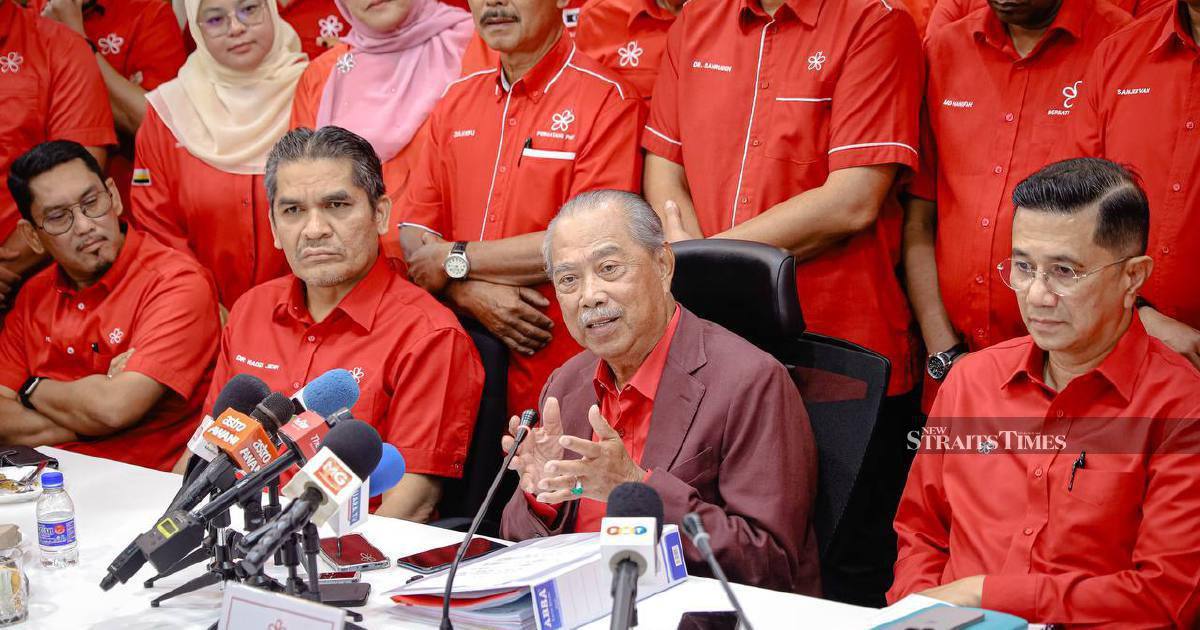
Parti Pribumi Bersatu Malaysia has signalled it is prepared to compete directly with Pas in the Johor state election should seat allocation negotiations between the two parties break down, according to party president Tan Sri Muhyiddin Yassin. The statement underscores growing friction within the broader coalition framework that has governed Malaysia since 2020, as smaller component parties assert their electoral independence and organisational strength ahead of potential state-level contests.
Muhyiddin's remarks come amid ongoing discussions between various Malay-Muslim political parties over seat distribution arrangements in Johor, a state that has historically been dominated by the coalition that currently holds federal power. The party president's willingness to openly acknowledge the possibility of electoral clashes with Pas, a significant political force with its own constituency base, reflects a shifting dynamic within coalition politics where shared governance at the federal level does not necessarily translate to harmonious cooperation at state elections.
Johor represents a critical battleground for Malaysian politics given its large electoral representation and demographic composition. The state's 56 state assembly seats make it the second-largest legislative chamber in the country after Selangor, and control of the state government carries substantial symbolic and financial implications. Any electoral contest involving multiple federal coalition partners would fragment the Malay-Muslim vote and potentially reshape the political landscape in a state that has seen significant demographic and economic changes in recent years.
The possibility of Bersatu and Pas contesting the same seats reflects broader questions about the sustainability of Malaysia's current coalition structure, which has held together despite considerable ideological differences and competing organisational interests. Pas has historically positioned itself as the defender of Islamic interests and Malay rights, while Bersatu was founded more recently as a splinter from the United Malays National Organisation and has built its appeal around governance and anti-corruption messaging. These different appeals mean that while the parties can coexist in a broader coalition framework, they also compete for overlapping constituencies.
The Johor situation gains added significance because the state witnessed dramatic political realignment in 2023 when its state government underwent substantial change. Any upcoming election in Johor would test whether the coalition can maintain its electoral dominance or whether grassroots divisions have widened sufficiently to allow opposition parties to make gains. The potential for internal coalition contests, rather than contests between the government coalition and opposition blocks, represents a concerning scenario for those seeking political stability.
Muhyiddin's public positioning on this matter suggests Bersatu is confident in its organisational capabilities and believes it can compete effectively even against established rivals. The party has been building its presence across various states and has made organisational improvements since its formation. Such confidence, whether justified or not, indicates the party leadership believes it would not be severely disadvantaged by electoral contests with other coalition members. This self-assurance could either stabilise negotiations by indicating Bersatu will not accept unfavourable arrangements, or destabilise them by suggesting the party views direct competition as acceptable.
From a Malaysian perspective, the implications of coalition instability at state level are significant for investment confidence, governance continuity, and public service delivery. States with uncertain political situations may find that partisan tensions interfere with long-term planning and development priorities. Johor, as an economically significant state with substantial foreign investment particularly in manufacturing and logistics, cannot afford extended periods of political transition or governance uncertainty. The clarity that electoral arrangements provide—whether through agreement or through settlement via the ballot box—is important for practical administration.
The reference to potential seat clashes also highlights the broader challenge that coalition politics in Malaysia faces as smaller parties seek to maintain relevance while also participating in federal governance. Unlike the previous dominant-party system where one organisation effectively controlled multiple parties, the current arrangement requires continuous negotiation and accommodation. When these negotiations appear likely to fail, parties must demonstrate they retain alternatives—in this case, the alternative being direct electoral competition. Muhyiddin's statement performs this function while potentially also signalling to coalition partners that Bersatu's demands deserve serious consideration.
For Southeast Asian observers watching Malaysian politics, this development illustrates how even relatively stable coalition arrangements remain subject to pressures from component parties seeking to preserve and expand their political bases. The region has various examples of coalition arrangements that have fractured or transformed, often driven by similar dynamics where parties simultaneously cooperate nationally while competing locally. Malaysia's experience in managing these tensions could offer lessons for other plural societies in the region attempting to maintain multi-party governing arrangements.
Looking ahead, whether Bersatu and Pas actually contest the same seats in any Johor election will depend on negotiations that remain ongoing and subject to various political and strategic calculations. What Muhyiddin's statement accomplishes is to establish that Bersatu retains political agency and will not accept unfavourable arrangements simply to maintain coalition unity. This posturing is typical of coalition politics but also reflects real tensions that periodically surface and require active management by senior party leaderships and federal government authorities seeking to maintain the stability of the current governing arrangement.