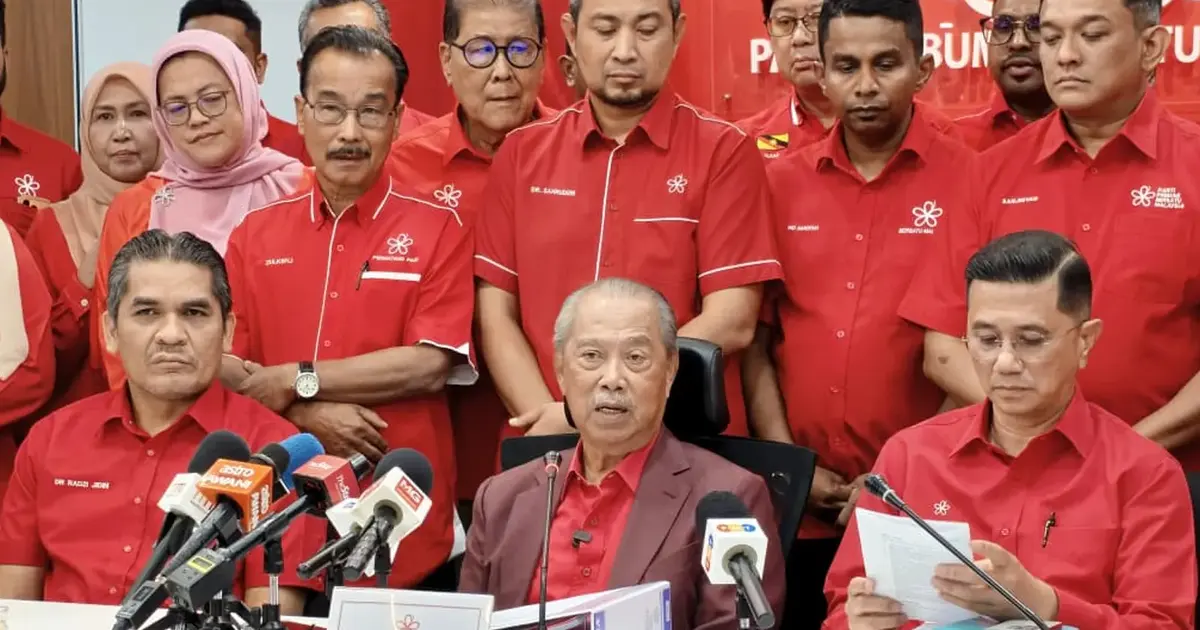
Bersatu's continued participation in the Perikatan Nasional coalition has been formally reaffirmed by party president Muhyiddin Yassin, settling questions about the bloc's stability at a critical juncture in Malaysian politics. The decision reflects the party's assessment that the coalition enjoys sufficient public backing to warrant sustained investment in the partnership, despite the fluid nature of coalition politics in Malaysia.
Muhyiddin's statement carries significance beyond routine political affirmation. Bersatu, which emerged as a splinter group from UMNO and has positioned itself as a centrist alternative, brings crucial political weight to Perikatan Nasional. The party controls a meaningful number of parliamentary seats and maintains considerable influence in several state governments, making its continued allegiance pivotal to the coalition's structural integrity and electoral viability.
The timing of this declaration suggests a response to persistent speculation about potential realignments. Malaysian politics has witnessed numerous coalition shifts and party repositioning in recent years, creating an environment where political commitments are routinely questioned. By publicly reaffirming Bersatu's dedication to Perikatan Nasional, Muhyiddin appears to be attempting to stabilise coalition messaging and project unity to both supporters and political rivals.
The foundation Muhyiddin cites—general public acceptance—is particularly noteworthy as a justification. This framing suggests that the party leadership views Perikatan Nasional as enjoying genuine grassroots legitimacy rather than merely representing elite consensus. For Malaysian voters accustomed to coalition politics, this distinction matters; coalitions perceived as having popular support tend to demonstrate greater resilience than those seen as purely transactional arrangements between party elites.
Bersatu's trajectory since its formation has been characterised by navigating between different political orientations. Having initially aligned with Pakatan Harapan following the 2018 election, the party subsequently joined forces with UMNO and PAS to form Perikatan Nasional, demonstrating pragmatic willingness to shift alliances. The current reaffirmation suggests the party has found a coalition alignment it believes serves both its members' interests and broader political objectives.
From a Southeast Asian perspective, Bersatu's stability within Perikatan Nasional has broader implications. Regional political observers monitor Malaysian coalition dynamics closely, as they often prefigure patterns elsewhere in the region. Malaysian coalition politics, with its ethnic-based party structure and complex negotiation dynamics, serves as a template studied by political analysts across Southeast Asia, making Bersatu's movements inherently significant beyond national borders.
The decision also reflects Bersatu's assessment of electoral prospects. By securing its position within Perikatan Nasional ahead of potential future elections, the party is positioning itself within a coalition framework that it apparently believes offers optimal chances of electoral success. This calculation likely factors in regional representation, ministerial opportunities, and the coalition's competitive standing against rival blocs.
For Malaysian observers concerned with political stability, Bersatu's continued commitment reduces immediate uncertainty about coalition composition. Political transitions and coalition collapses create periods of instability that can affect policy implementation, investor confidence, and governance effectiveness. A stable, publicly affirmed coalition structure provides a more predictable political environment, even when underlying tensions persist beneath the surface.
The statement also matters for Perikatan Nasional's broader positioning. As the coalition seeks to establish itself as a credible alternative to rival alliances, having its constituent parties publicly reaffirm commitment signals internal cohesion. Bersatu's endorsement, given its historic negotiating leverage and political flexibility, carries additional weight in coalition messaging, potentially influencing perceptions among floating voters who evaluate coalition stability when making electoral choices.
However, political realities suggest continued vigilance about coalition sustainability. Malaysian politics frequently demonstrates that public commitments, while meaningful, do not guarantee long-term alignment when circumstances shift. Economic pressures, federal-state governance tensions, or shifting public sentiment could create conditions for renewed coalition negotiations or realignments, as has occurred repeatedly throughout Malaysian political history.
The emphasis on public acceptance as the foundation for this commitment also suggests Bersatu recognises the evolving nature of Malaysian political competition. Voters increasingly respond to coalition performance in governance and policy delivery rather than purely to party brand or leadership personality. By grounding its decision in public backing, Bersatu leadership appears to acknowledge that coalition membership must ultimately be justified through legitimate public engagement and perceived governance benefits.
Moving forward, Bersatu's position within Perikatan Nasional will likely depend on whether the coalition can translate public support into tangible policy achievements and inclusive governance. The party's commitment, while substantive, remains conditional on broader coalition performance and the maintenance of conditions that persuade both party leadership and members that Perikatan Nasional remains the optimal political vehicle for their objectives. This dynamic illustrates how coalition politics in Malaysia continues to balance structured party loyalties with pragmatic assessment of evolving political circumstances.