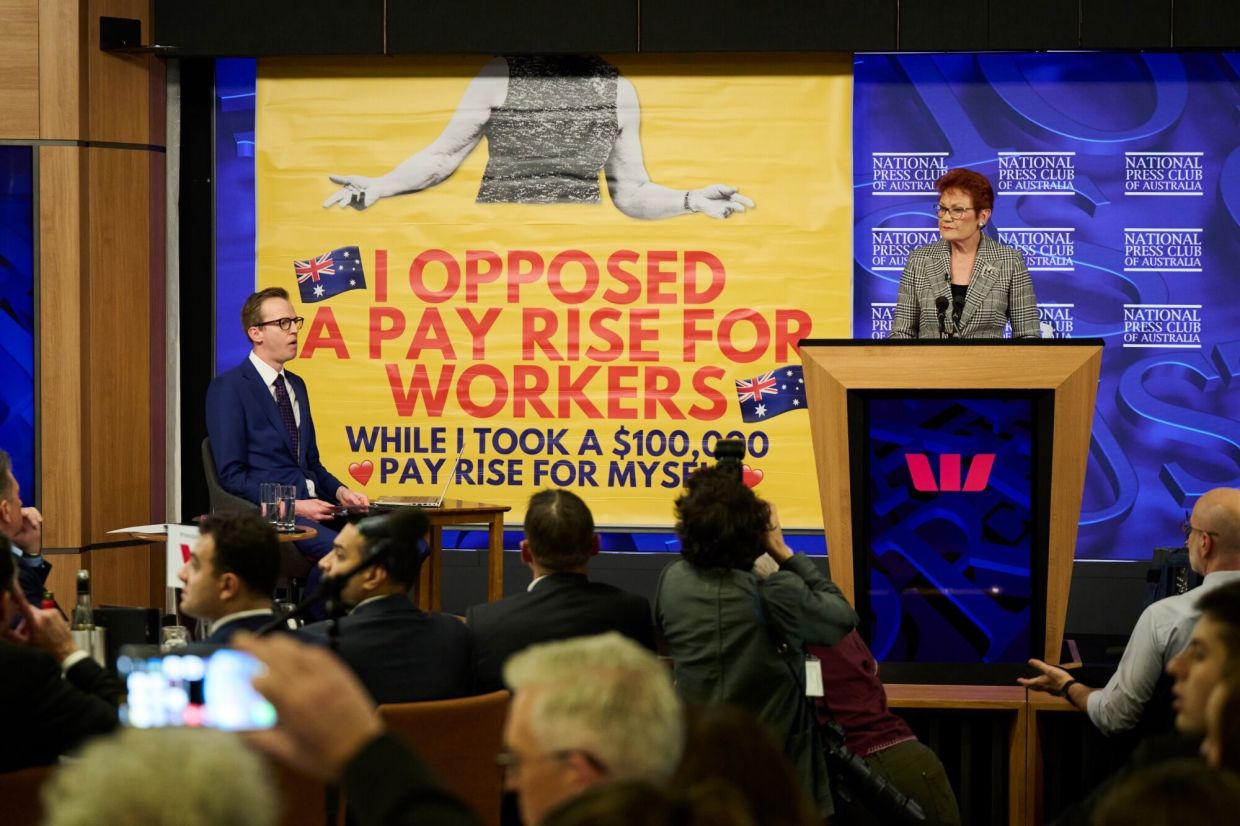
Pauline Hanson, leader of Australia's One Nation party, has launched a frontal assault on the country's multicultural framework, declaring that the nation must become monocultural to address its deepening housing affordability crisis. Speaking at the National Press Club in Canberra on Wednesday, Hanson framed multiculturalism as fundamentally incompatible with national cohesion, positioning cultural homogeneity as essential to resolving the economic pressures facing ordinary Australians.
The hard-right populist's remarks represent a notable escalation in One Nation's messaging, particularly given that this constituted her first address to the National Press Club despite a 30-year career in electoral politics. Hanson's appearance at the prestigious venue underscores her party's growing political momentum and willingness to challenge established consensus on immigration and national identity. During her speech, she articulated a distinction that she argues is crucial to understanding Australia's future trajectory: while the nation may be multiracial in its demographic composition, it cannot sustain a multicultural policy framework and remain cohesive. Instead, she contended, all Australians must operate within "the one cultural umbrella," implying a shared values system that transcends ethnic or religious background.
The timing of Hanson's intervention coincides with a period of significant political turbulence in Australian politics. One Nation's polling surge over the past year has accelerated markedly since the centre-right coalition's electoral collapse in May of the previous year. This momentum reflects broader voter dissatisfaction with economic management across the political spectrum, creating space for populist messaging that offers simplified explanations for complex structural problems affecting household budgets and quality of life.
Hanson has pinpointed immigration as the root cause of Australia's housing crisis, a claim that resonates with voters grappling with rapid price escalation and rental market pressures. Her proposed solution involves slashing migration intake substantially, measures that extend beyond reducing overall numbers to include ideological screening mechanisms. Specifically, Hanson pledged to restrict entry for individuals from regions she characterises as "immersed in extremism like radical Islam," signalling that One Nation's immigration platform blends quantitative restrictions with cultural and religious considerations. This framing weaponises contemporary security anxieties to advance a restrictionist immigration agenda that encompasses both economic and identity-based arguments.
The economic context underpinning Hanson's political opportunity merits careful analysis. Australian households have endured a punishing combination of inflationary pressure, escalating interest rates, and elevated fuel costs stemming from geopolitical instability in the Middle East. These macroeconomic headwinds have created genuine financial stress for mortgage holders, renters, and wage earners across income levels. Within this environment of economic anxiety, One Nation's message that immigration bears direct responsibility for housing unaffordability holds intuitive appeal, despite the reality that housing supply constraints, zoning regulations, investment patterns, and construction costs represent more substantive explanatory factors.
Prime Minister Anthony Albanese's Labor government has attempted to mitigate specific cost-of-living pressures through targeted interventions, including a temporary reduction in fuel excise taxation. The government has also advanced tax reform proposals designed to enhance housing affordability and reduce the financial burden on working families. However, these incremental measures appear insufficient to counter the political momentum generated by One Nation's more comprehensive narrative linking immigration to economic distress. Albanese himself has acknowledged the rise of populist messaging and what he characterises as "simplistic grievance-based politics," presenting this as a symptom of an economic system that has ceased functioning effectively for substantial portions of the population.
The broader ideological stakes embedded in Hanson's monocultural framework warrant consideration beyond the immediate Australian context. For Southeast Asian observers and policymakers, including those in Malaysia, Hanson's rhetoric illuminates how immigration debates in developed economies increasingly centre on cultural assimilation and national identity rather than purely economic efficiency arguments. Her distinction between multiracialism and multiculturalism—accepting ethnic diversity while rejecting cultural pluralism—represents a particular variant of integration politics that resonates across developed democracies grappling with immigration's social consequences.
For Malaysia, a nation explicitly founded on multicultural and multi-faith principles enshrined within its constitutional architecture, the Australian debate offers instructive contrast. Where Malaysia's foundational consensus accepts that sustainable governance requires recognising and accommodating multiple cultural and religious traditions, Hanson's framework explicitly rejects such pluralism. This divergence reflects fundamentally different historical experiences and constitutional settlements, yet contemporary challenges around social cohesion, economic inequality, and national identity manifest across both contexts.
One Nation's electoral trajectory suggests that concerns about housing affordability and cost-of-living pressures possess sufficient political salience to enable insurgent parties offering populist remedies to challenge establishment consensus. The party's success in translating economic grievance into polling momentum demonstrates that voters experiencing genuine financial hardship remain receptive to political actors proposing comprehensive narratives explaining their difficulties, even when those narratives oversimplify underlying causes. Hanson's positioning of multiculturalism as a policy failure rather than demographic reality reflects strategic political communication designed to unite disparate constituencies around shared opposition to immigration, regardless of whether immigration represents the primary driver of housing market dysfunction.