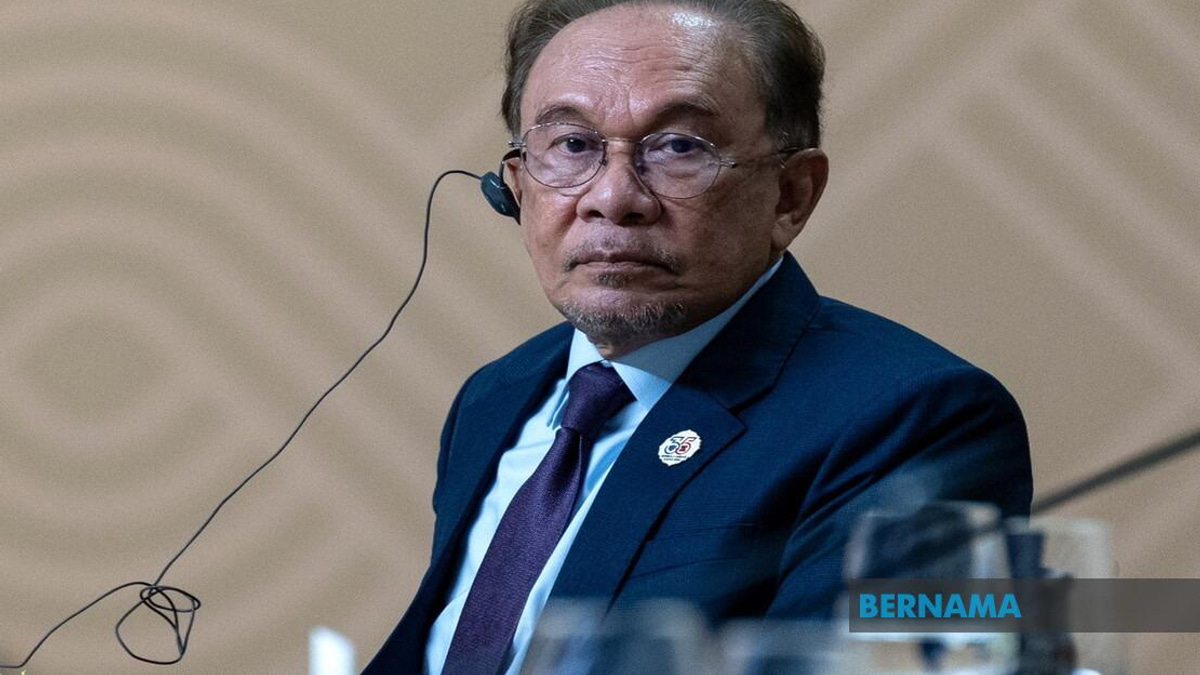
Prime Minister Datuk Seri Anwar Ibrahim has issued a pointed warning to Malaysians, urging them to resist political narratives deliberately engineered to fragment the nation along racial and ethnic lines. The message, delivered amid mounting concerns about polarisation in domestic politics, underscores a deepening anxiety within government circles that Malaysia's delicate social fabric faces serious strain from calculated divisive rhetoric.
Anwar's intervention reflects the precarious reality of Malaysian politics, where communal identity remains a potent electoral tool despite decades of coexistence among diverse populations. The prime minister's caution addresses a pattern observers have documented for months: the calculated deployment of inflammatory language by political actors seeking to mobilise voter blocs by appealing to ethnically coded grievances and anxieties.
The timing of Anwar's remarks carries particular significance given Malaysia's recent political turbulence. The nation has witnessed a series of elections and coalition realignments that have intensified competition for voter support, often at the expense of national cohesion. Politicians across the spectrum have occasionally resorted to rhetoric emphasising communal differences rather than shared national interests, a strategy that Anwar now explicitly rejects from his position atop government.
What distinguishes Anwar's statement is its emphasis on the concrete human costs of racial divisiveness. His argument moves beyond abstract appeals to unity by highlighting how ordinary Malaysians—regardless of ethnicity or religion—suffer material consequences when political elites prioritise factional advantage over collective welfare. When communities fracture along lines of mistrust and suspicion, economic opportunity shrinks, investment hesitates, and social services become entangled in disputes about resource allocation.
The prime minister's warning also implicitly acknowledges the digital age's amplification of divisive messaging. Social media platforms have created new channels through which inflammatory content spreads rapidly, often with minimal accountability for accuracy or social impact. Political operatives have demonstrated willingness to exploit these technologies, calculating that the electoral benefits of inflaming specific communities outweigh reputational costs—a calculus Anwar appears determined to challenge.
For Malaysian business and investment communities, political stability rooted in genuine social cohesion represents a fundamental prerequisite for prosperity. Foreign investors and multinational corporations carefully monitor internal political conditions before committing capital, and racial tensions—whether manufactured or genuine—send negative signals about governance quality and rule of law. Anwar's message thus carries economic weight alongside its moral and civic dimensions.
The regional context amplifies the significance of his position. Southeast Asia faces mounting pressure from external geopolitical competition, economic uncertainty, and transnational challenges requiring unified national responses. Countries that succumb to internal division during this critical period risk falling further behind more cohesive neighbours in attracting investment, developing critical infrastructure, and negotiating advantageous trade arrangements.
Anwar's appeal to Malaysian voters to resist divisive campaigns represents an attempt to reframe political competition around substantive policy differences rather than communal identity. His implicit argument suggests that robust democratic contestation need not depend on inflaming ethnic tensions or religious anxieties. Instead, competing visions for economic management, social provision, environmental stewardship, and institutional reform could animate electoral campaigns without appealing to voters' deepest tribal instincts.
However, the persistent recourse to racial rhetoric by some political actors suggests that structural incentives within Malaysia's electoral and party systems encourage such behaviour. As long as particular constituencies reliably vote along communal lines, politicians face limited electoral pressure to abandon messaging that exploits these divisions. Anwar's intervention addresses the symptom rather than underlying institutional factors that reward divisiveness.
The prime minister's caution also speaks to anxieties within his own political coalition about defections and electoral vulnerability. His warnings about racial divisiveness may serve dual purposes: genuinely promoting national cohesion while simultaneously delegitimising opposition tactics that threaten his government's electoral prospects. The ambiguity reflects the complexity of political communication in Malaysia, where appeals to national interest often intertwine with partisan calculation.
Moving forward, whether Anwar's message gains traction depends partly on his government's willingness to enforce standards against divisive rhetoric within its own ranks and to demonstrate through concrete policies that alternative approaches to politics yield tangible benefits. Citizens subjected to competing claims about which approach best serves their interests require evidence, not merely exhortations to transcend communal identities that have deep historical roots and continue to structure significant aspects of Malaysian social and economic life.