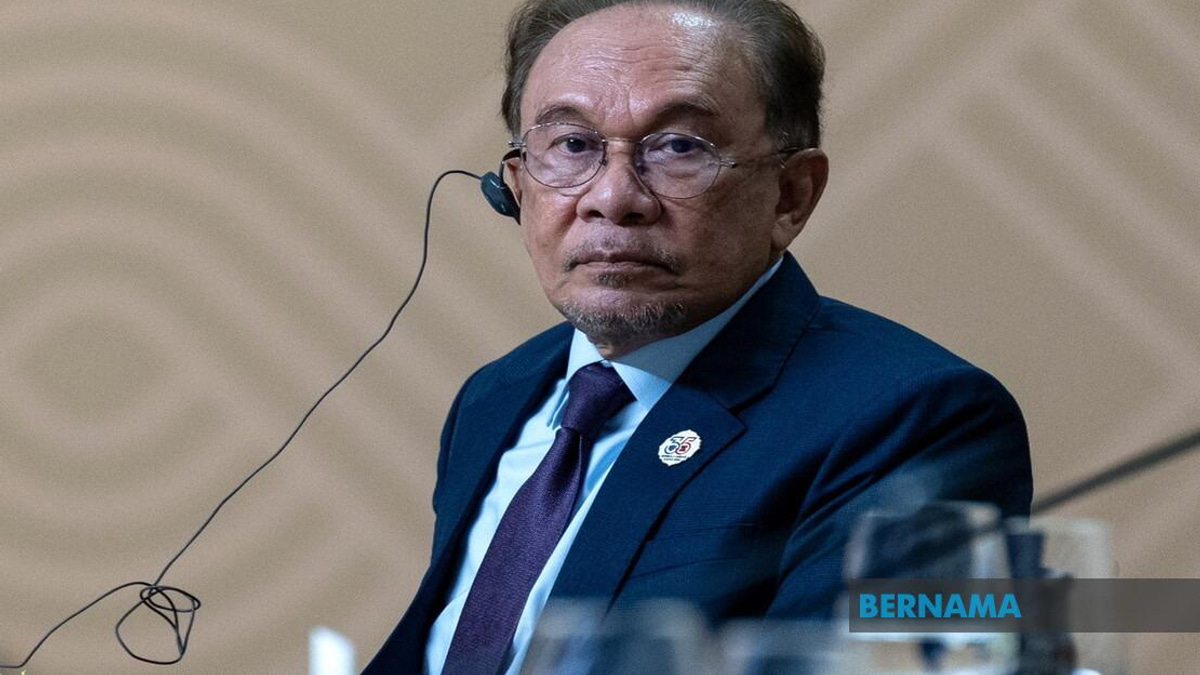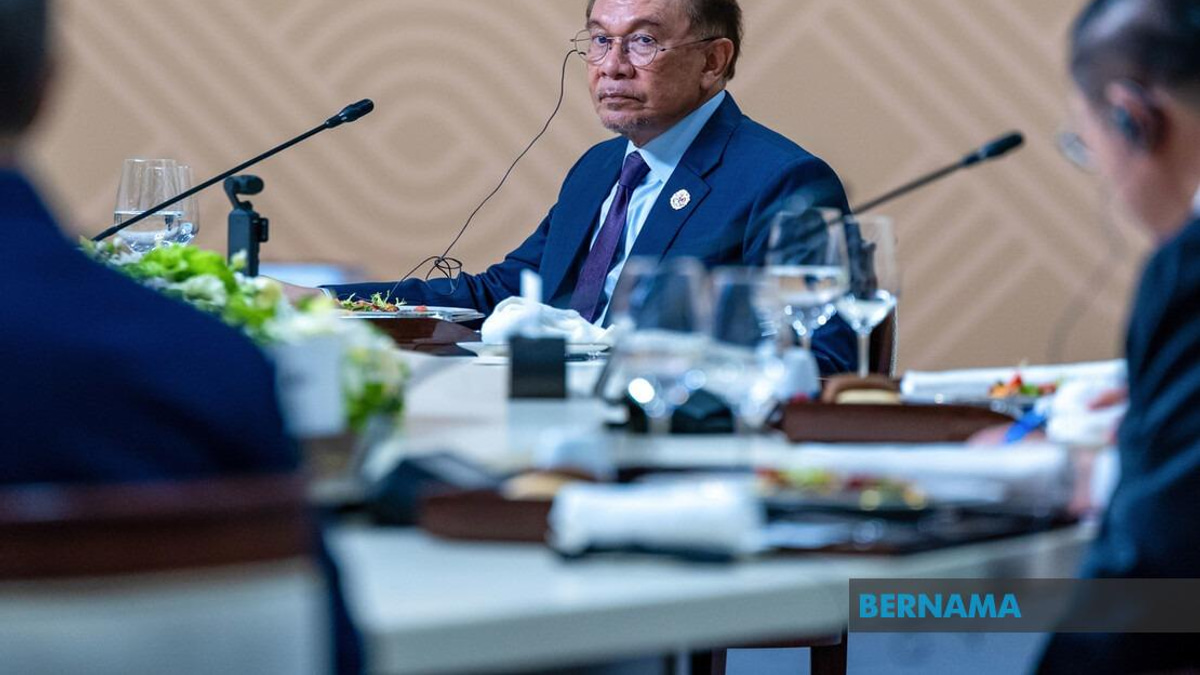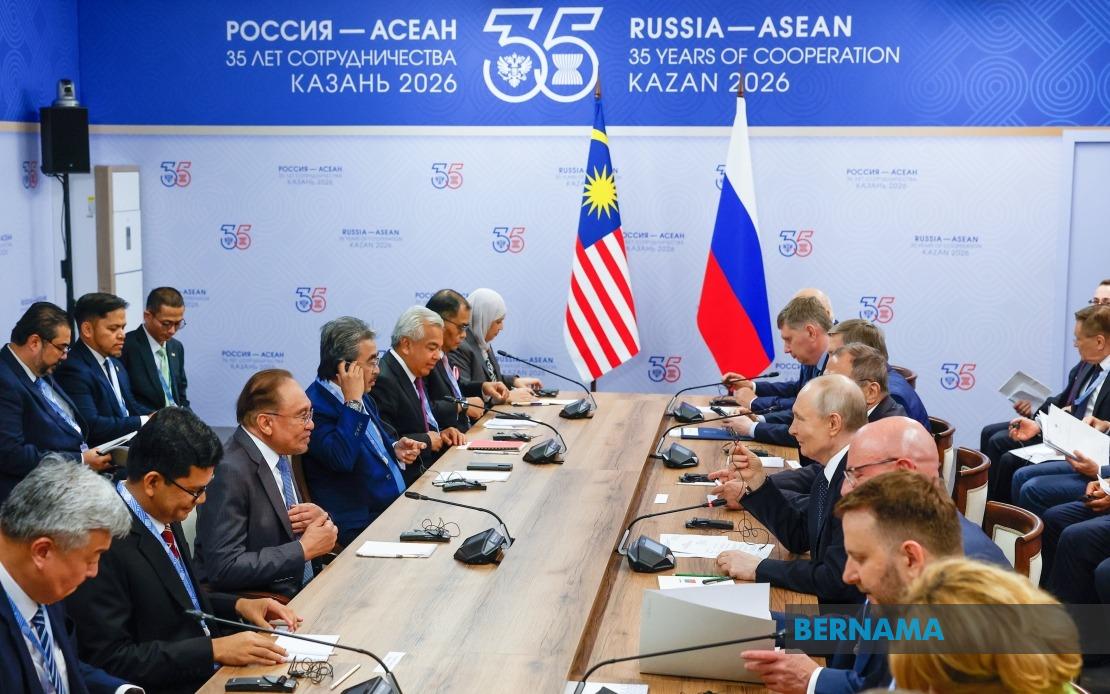
Prime Minister Datuk Seri Anwar Ibrahim has publicly acknowledged the diplomatic stances of Russian President Vladimir Putin and Chinese President Xi Jinping, crediting both leaders with advocating for peace and condemning violence against civilian populations in Gaza, Iran and Lebanon. The Malaysian premier made these remarks during an exclusive television interview with RT, the Russian state broadcaster, while attending the Commemorative Summit marking the 35th anniversary of ASEAN-Russia relations in Kazan on June 18.
Anwar's comments underscore Malaysia's multifaceted diplomatic approach to one of the world's most complex geopolitical crises. Rather than aligning with any single superpower or ideological bloc, the Prime Minister emphasised that Malaysia has consistently maintained an independent position on Middle Eastern conflicts, demonstrating this principled stance through parliamentary decisions made on a bipartisan basis. This approach extends beyond rhetorical positioning; Anwar detailed his active engagement with regional leaders across the Gulf states, Pakistan, Türkiye and Iran as part of coordinated efforts to achieve what he describes as a fair and equitable resolution to the ongoing conflicts.
A central theme of Anwar's remarks concerns Malaysia's rejection of the concept of neutrality in favour of what ASEAN terms "centrality." This semantic distinction carries significant weight in Southeast Asian diplomacy. Centrality, as Anwar explained, signals that while Malaysia and ASEAN are not bound to any particular superpower or ideological framework, they remain unequivocally positioned to address human rights violations, atrocities and abuses wherever they occur. This formulation allows Malaysia to transcend traditional Cold War-style alignments while maintaining moral clarity on issues affecting vulnerable populations, including religious minorities and civilian communities caught in conflict zones.
The Prime Minister levelled sharp criticism at what he characterised as Western hypocrisy regarding Israel's military operations and their tacit endorsement by the United States. Anwar questioned the logical inconsistency of Western nations that simultaneously advocate for international law and humanitarian principles while either condoning or remaining silent on actions he views as violations of those same principles. His remarks highlight a frustration shared by many non-aligned nations: that geopolitical power dynamics frequently override stated commitments to universal standards of conduct, creating a system of selective accountability that undermines the credibility of international governance structures.
Anwar's criticism extended to what he perceived as asymmetrical international responses to different actors in the region. While acknowledging that some nations voice concerns about Iran's retaliatory actions, he stressed that such criticism rings hollow when it occurs against a backdrop of complete silence regarding initial aggression directed at Iran. This apparent double standard, in Anwar's view, exemplifies a broader pattern of hypocrisy that he argues must be addressed if the international community is to maintain coherent principles governing state behaviour and humanitarian protection.
The broader geopolitical implications of Anwar's statements deserve careful consideration for Malaysian observers and policymakers. By publicly commending both Putin and Xi, the Prime Minister reinforces Malaysia's positioning as a nation willing to acknowledge and work with multiple regional and global powers, neither exclusively aligned with Western-led institutions nor wholly dependent on Beijing or Moscow. This balanced approach reflects Malaysia's economic and security interests, which span relationships with the United States, China, India and regional neighbours. However, it also signals that Malaysia will not hesitate to critique Western policies when they conflict with what it views as principles of international law and human rights protection.
For Malaysia's strategic position in Southeast Asia, maintaining this independent voice carries both advantages and risks. The advantage lies in credibility with diverse audiences and the ability to serve as a bridge in polarised international debates. ASEAN's own charter emphasises non-interference and sovereign equality, values that align with Malaysia's stated position. The risk involves potential backlash from Western partners who may view such criticism as diminishing solidarity on broader strategic issues including concerns about Chinese assertiveness in the Indo-Pacific region. Balancing these considerations requires sophisticated diplomacy of precisely the kind Anwar appears to be attempting.
The timing of these remarks during an official visit to Russia carries its own significance. By delivering these comments to a Russian audience in Kazan, Anwar signals respect for Russia's geopolitical perspectives while simultaneously demonstrating that Malaysia's appreciation for Russian positions on Middle Eastern affairs does not translate into automatic alignment on other issues. This nuanced messaging serves multiple audiences: demonstrating to Russia that Malaysia values its viewpoint while reassuring Western partners that Malaysian criticism of specific Western policies does not constitute a fundamental realignment of strategic preferences.
Anwar's emphasis on Malaysia's parliamentary bipartisan approach to these issues reflects another important dimension of Malaysian policymaking. Securing cross-party consensus on foreign policy matters lends domestic legitimacy and durability to Malaysia's international positions. When parliamentary opposition and ruling coalitions agree on positions regarding international conflicts, those positions carry greater weight domestically and signal consistency to international partners. This internal political foundation strengthens Malaysia's ability to maintain independent foreign policy stances without appearing to reflect merely the preferences of a particular political faction.
The Prime Minister's diplomatic engagement across multiple regional actors—from Gulf states to Iran, from Türkiye to Pakistan—demonstrates Malaysia's recognition that sustainable solutions to Middle Eastern conflicts require inclusive dialogue rather than zero-sum competition between competing power blocs. This multilateral engagement strategy acknowledges that regional actors themselves often possess greater leverage and insight into conflict dynamics than distant powers, making their perspectives and potential roles in conflict resolution indispensable. Malaysia's willingness to engage constructively with all parties positions it potentially as a credible mediator or contributor to peace processes.
For Malaysian citizens and policymakers observing these international developments, Anwar's statements reflect a particular vision of Malaysia's role in an increasingly multipolar world. Rather than passive acceptance of decisions made by distant capitals, this vision posits Malaysia as an active participant in global debates about fundamental principles, willing to speak clearly about double standards and hypocrisy while simultaneously maintaining productive relationships with multiple partners. Whether this approach will successfully navigate the complexities of contemporary geopolitical competition remains an evolving question, but it represents a deliberate choice to prioritise principles alongside pragmatic national interests.