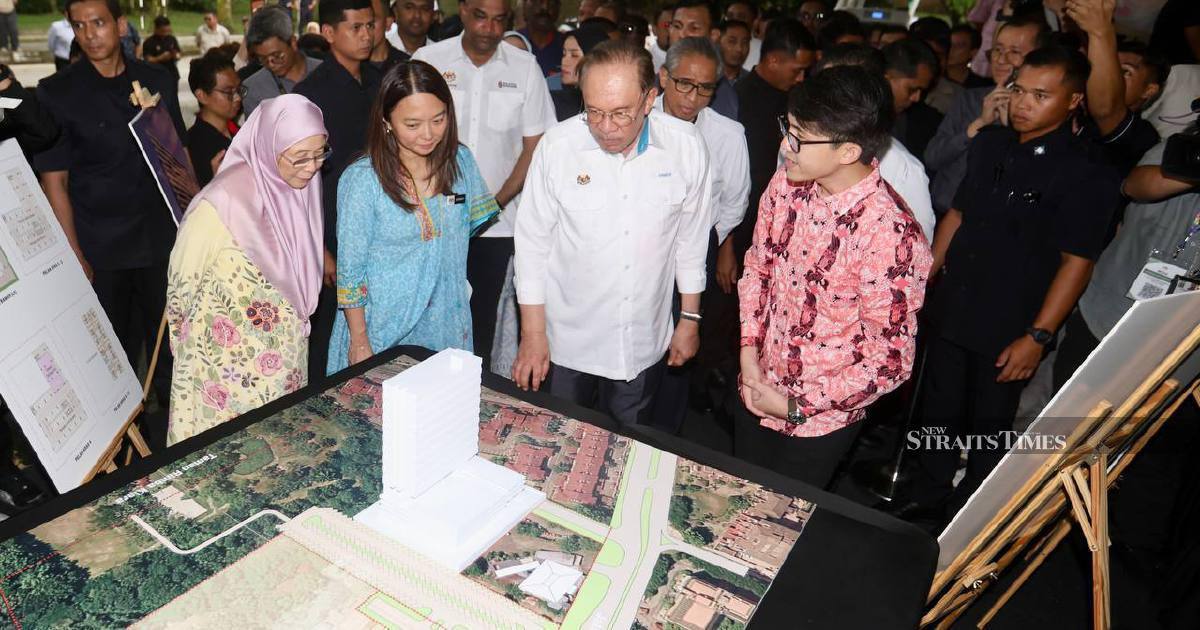
Prime Minister Datuk Seri Anwar Ibrahim has moved to allay concerns that the government is neglecting the interests of Malaysia's urban poor, emphasizing that policymakers remain dedicated to protecting their fundamental rights and improving their living standards. Speaking on the contentious Bukit Kiara development initiative, the premier presented the scheme as a practical demonstration of how his administration balances economic growth with the welfare needs of lower-income city dwellers.
The Bukit Kiara project has emerged as a significant flashpoint in discussions about urban development in Malaysia, particularly regarding whether property redevelopment initiatives adequately protect vulnerable populations. The government's approach to such projects reflects broader tensions between modernization ambitions and the preservation of affordable housing and community stability in rapidly expanding metropolitan areas. Anwar's public defense of the initiative suggests awareness that urban poor constituents may harbor doubts about whether their voices carry sufficient weight in high-level development decisions.
Malaysia's urbanization trajectory has created complex social dynamics in cities like Kuala Lumpur, where rising property values and gentrification pressures threaten to displace established communities. The urban poor—comprising informal sector workers, low-income families, and marginalized groups—often lack the political capital to resist large-scale redevelopment schemes, even when such projects disrupt their livelihoods and housing security. This power imbalance makes prime ministerial reassurance particularly important for building public confidence in government intentions.
The Bukit Kiara scheme appears to incorporate mechanisms intended to ensure that affected urban communities benefit directly from development gains rather than bearing its social costs. Such provisions might include affordable housing quotas, skills training programs, relocation support, or community consultation processes. By highlighting these elements, Anwar seeks to demonstrate that development need not come at the expense of the vulnerable, a message with significant political resonance in an environment where wealth inequality has become an increasingly salient electoral concern.
Government credibility on matters affecting the urban poor carries particular weight given Malaysia's recent political history. Previous administrations faced criticism for development policies perceived as benefiting connected elites while marginalizing ordinary citizens. Anwar's emphasis on rights protection and inclusive development reflects a deliberate effort to differentiate his government's approach and build trust with constituencies that have historically felt excluded from decision-making processes affecting their neighborhoods and livelihoods.
The Bukit Kiara initiative also functions as a test case for how the current administration will navigate the tension between attracting foreign investment, driving economic growth, and ensuring that development benefits reach beyond wealthy segments of society. Successful execution—where affected communities actually experience tangible improvements in living conditions, employment, or housing access—could strengthen public confidence in future government development projects. Conversely, implementation failures or unequal distribution of benefits could deepen skepticism about official pronouncements regarding the poor.
Southeast Asian cities face mounting pressure to upgrade infrastructure and housing stock to accommodate growing populations and maintain international competitiveness. Malaysia is no exception, with Kuala Lumpur and other major cities requiring substantial capital investment in transport, utilities, and residential facilities. However, rapid urbanization without adequate safeguards for vulnerable populations has produced displacement crises and social tension across the region. Thailand, Indonesia, and the Philippines have all grappled with similar challenges, offering cautionary examples of development's human costs.
The framing of Bukit Kiara as evidence that the government champions urban poor interests represents a strategic political communication effort designed to reshape narratives around development and social responsibility. Rather than portraying growth as something that naturally benefits everyone, or conversely as something that necessarily harms the disadvantaged, Anwar presents it as achievable with appropriate regulatory frameworks and political will. This positioning appeals to middle-class aspirations for progress while simultaneously addressing working-class concerns about marginalization.
Implementation will ultimately determine whether such assurances prove substantive. Effective protection of urban poor rights requires not merely sympathetic rhetoric but concrete mechanisms: transparent land acquisition processes, fair compensation systems, skills development linked to new employment opportunities, and genuine community participation in project design. Without these elements, development initiatives risk repeating historical patterns where nominal consultation masks predetermined outcomes favoring established interests.
The broader context involves Malaysia's development agenda at a critical juncture, with policymakers balancing multiple imperatives: achieving middle-income country status, reducing the fiscal deficit, attracting quality investment, and maintaining social cohesion. Urban poor welfare policies fit within this larger framework, serving both humanitarian and pragmatic governance functions. Neglecting lower-income populations creates social instability and reduces domestic consumption capacity, while inclusive development strengthens both legitimacy and economic resilience.
Anwar's public commitment to urban poor rights reflects recognition that inclusive growth narratives have become essential to political viability in contemporary Malaysia. Whether this translates into substantive policy changes will determine the government's credibility on development matters over the longer term.