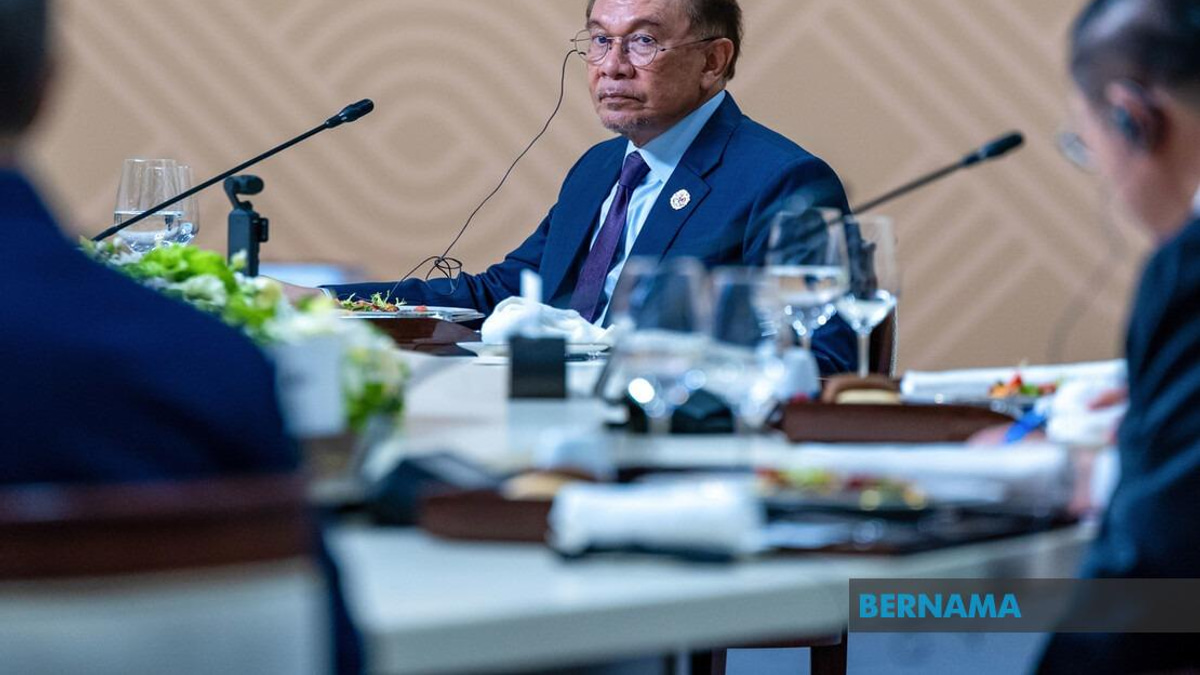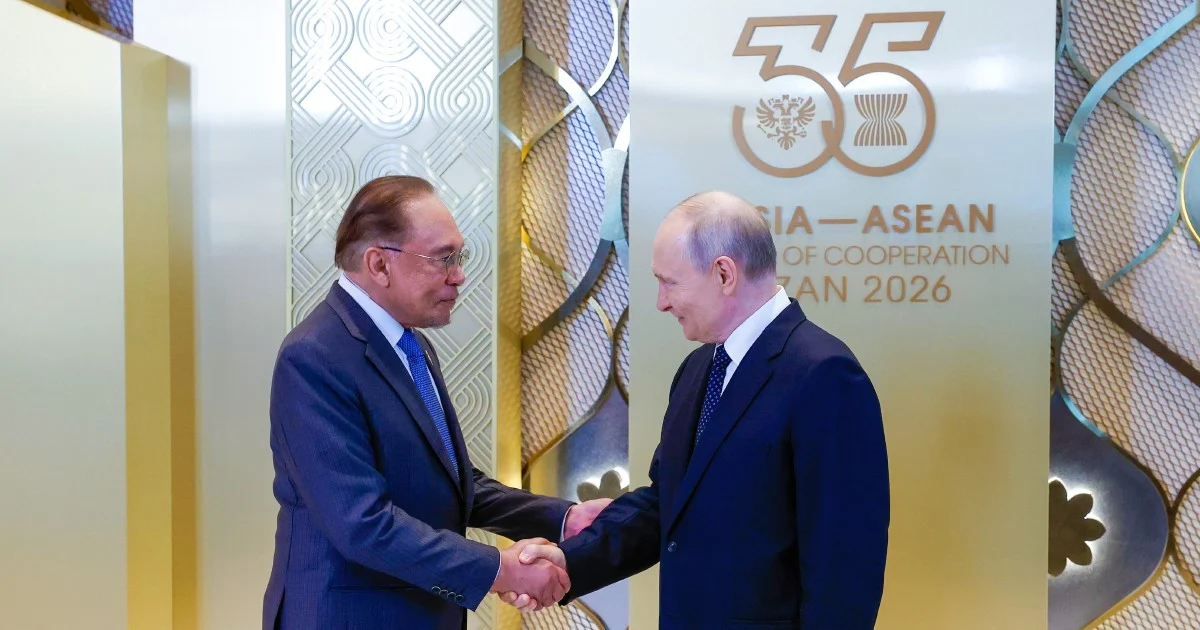
Prime Minister Datuk Seri Anwar Ibrahim and Russian President Vladimir Putin have held substantive talks aimed at broadening Malaysia's strategic partnership with Moscow, with negotiations centring on energy security and financial mechanisms designed to insulate bilateral commerce from international currency fluctuations. The discussions, which took place during high-level diplomatic engagement, reflect Malaysia's pragmatic approach to diversifying its international relationships and securing long-term supplies of critical resources for the nation's economic development.
Energy security ranks as a pressing concern for Malaysia, a resource-importing nation that relies heavily on foreign oil and liquefied natural gas to fuel its growing economy and power generation infrastructure. Russia, as one of the world's largest energy exporters, represents a potential counterweight to Malaysia's traditional suppliers and offers opportunities to establish more flexible, long-term supply arrangements. The timing of these discussions is significant given the volatility of global energy markets and Malaysia's efforts to build redundancy into its supply chains, reducing dependence on any single geopolitical bloc or regional supplier.
The emphasis on conducting trade in local currencies—ringgit for Malaysia and ruble for Russia—signals a deliberate shift away from dollar-denominated transactions. This approach aligns with broader trends across the Asia-Pacific region, where countries increasingly explore bilateral and regional payment mechanisms to reduce exposure to US monetary policy and mitigate the costs associated with currency conversion. For Malaysia specifically, expanding ringgit usage in international transactions enhances the currency's regional profile and supports efforts to position Kuala Lumpur as a financial hub within Southeast Asia.
Russia faces significant economic constraints stemming from international sanctions, which have fundamentally reshaped Moscow's trading relationships and forced a strategic pivot towards Asian markets. Malaysia, maintaining a non-aligned foreign policy position, has carefully balanced its relationships with Western nations and Russia, avoiding the kind of overt alignment that would invite sanctions exposure while remaining open to mutually beneficial economic partnerships. This balancing act reflects Malaysia's broader geopolitical strategy as a middle power navigating great power competition without sacrificing economic opportunity.
The bilateral trade framework between Malaysia and Russia has historically remained modest compared to Kuala Lumpur's commerce with other major partners, yet growing energy insecurity and the reconfiguration of global supply chains have created fresh impetus for deepening commercial ties. Enhanced cooperation could span not merely energy procurement but also infrastructure projects, technology transfer, and investments in sectors aligned with Malaysia's economic modernisation agenda. Russian expertise in petroleum extraction, refining, and petrochemical manufacturing could complement Malaysian capabilities and support value-addition across energy-related industries.
From a broader Southeast Asian perspective, Malaysia's engagement with Russia carries implications for regional diplomacy and economic integration. As ASEAN seeks to maintain centrality in regional affairs while respecting member states' individual foreign policies, Malaysia's approach—pragmatic commercial engagement without political confrontation—demonstrates how regional powers can diversify partnerships without destabilising the broader framework. Other ASEAN members may view such arrangements as templates for their own economic statecraft, particularly smaller nations seeking to maximise negotiating leverage with larger trading powers.
The local currency mechanism deserves particular scrutiny, as it represents a financial innovation with potentially lasting consequences. By trading in ringgit and ruble, both nations reduce transaction costs, eliminate currency exchange risk, and create financial linkages that may eventually support broader economic integration. Should the arrangement succeed and expand, it could catalyse similar currency arrangements across Southeast Asia, gradually reducing reliance on the dollar in intra-regional commerce and strengthening the region's collective economic autonomy.
Malaysia's approach also addresses domestic political considerations, as securing reliable energy supplies at competitive prices benefits consumers and supports industrial competitiveness. Any expansion of energy imports from Russia, provided through stable long-term contracts, could help moderate domestic fuel costs and reduce pressure on Malaysia's current account, particularly important for a nation navigating post-pandemic economic recovery and inflationary pressures. Domestic economic stability, in turn, supports Malaysia's broader development ambitions and social cohesion.
The timing of this engagement also reflects shifting geopolitical calculations within Asia, where traditional Cold War alignments have given way to pragmatic, issue-specific partnerships. Malaysia, alongside many Asian nations, recognises that economic interdependence and strategic autonomy are not mutually exclusive objectives. The discussions with Putin thus represent not ideological alignment but rather rational economic statecraft—identifying areas of mutual interest and building institutional arrangements to realise gains from trade while maintaining political independence.
Looking forward, the success of these initiatives will depend on translating diplomatic agreement into concrete commercial arrangements. Energy supply contracts, investment protocols, and currency trading mechanisms require careful negotiation and robust institutional support. Malaysia's financial sector, particularly its banking system and capital markets, will play a crucial role in facilitating the local currency arrangements and ensuring their stability and efficiency. Regional development banks and financial institutions may also contribute to building the infrastructure necessary for expanded Malaysia-Russia economic cooperation.
The broader significance of Anwar's engagement with Putin lies in its reinforcement of Malaysia's non-aligned foreign policy tradition, updated for contemporary geopolitical realities. Rather than choosing sides in great power competition, Malaysia seeks to benefit from economic relationships with multiple partners while protecting its core interests and maintaining strategic flexibility. This approach, if executed carefully, allows Malaysia to punch above its weight diplomatically and economically, securing resources and partnerships that support national development objectives while preserving the diplomatic space necessary to navigate an uncertain international environment.