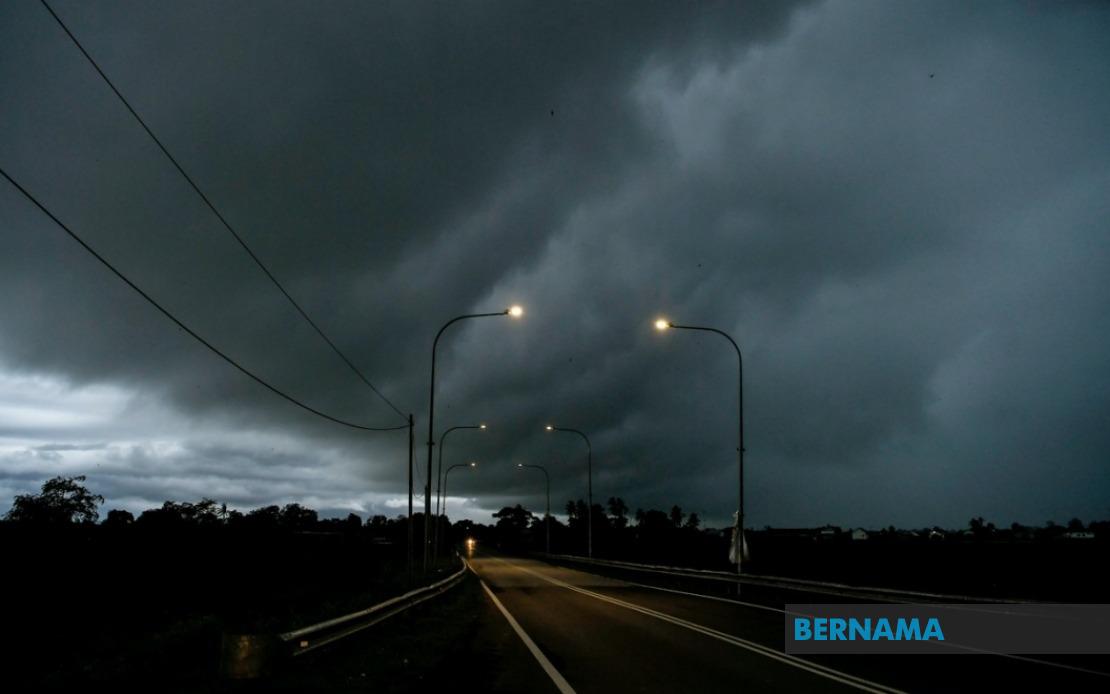
The Malaysian Meteorological Department has issued a severe weather alert covering substantial portions of Peninsular Malaysia, Borneo and the Federal Territory of Labuan, cautioning residents and authorities to brace for potentially dangerous atmospheric conditions lasting through the early hours of June 19. The forecaster identified thunderstorms accompanied by heavy rainfall and strong wind gusts as the primary hazards, with the warning period commencing immediately and remaining in effect until 1 am the following day.
In Peninsular Malaysia, the alert encompasses strategically dispersed locations across the northern and eastern regions. Kedah faces risk in the lowland districts of Padang Terap, Sik and Baling, while Perak's inland Hulu Perak district has been flagged. The east coast bears particular attention, with Kelantan's five affected areas—Tumpat, Pasir Mas, Jeli, Tanah Merah and Kuala Krai—forming a contiguous belt of vulnerability. Pahang's Jerantut district, situated in the state's interior, completes the Peninsular coverage.
Sarawak experiences the most geographically extensive warning zone, reflecting the monsoon system's particular intensity across Borneo. The Kuching division faces danger in both the state capital and surrounding districts of Serian and Samarahan. Central Sarawak sees multiple administrative zones placed on alert, including Sri Aman itself alongside the southern Betong division covering Pusa and Betong proper. The coastal belt experiences simultaneous warnings, with Sarikei's Julau area, Sibu's interior reaches in Kanowit and Selangau, and the manufacturing hub of Bintulu all designated as high-risk zones. Kapit division's remote constituencies of Kapit and Bukit Mabong, combined with the entire northern swath encompassing Miri's coastal and interior subdivisions—Subis, Beluru, Miri and Marudi—plus Limbang division creates a comprehensive eastern warning perimeter.
Sabah's alert covers three distinct geographic zones reflecting the state's administrative divisions. The Interior division's Kuala Penyu district represents the southwestern exposure, while the West Coast division's twin districts of Putatan and Ranau face simultaneous risk. Sandakan division, historically prone to severe weather phenomena, sees both Telupid and Beluran placed under observation. Additionally, Labuan, Malaysia's only federal territory located offshore between Sabah and Brunei, has been included in the alert framework.
Thunderstorm warnings of this magnitude and geographical breadth typically emerge during transitional monsoon periods when atmospheric instability peaks and moisture convergence intensifies. For Malaysian readers, such alerts underscore the importance of maintaining awareness during the Southwest Monsoon season, which generally runs from May through September. The concurrent hazards—heavy precipitation, lightning strikes and sudden wind intensity—present compounded risks for both urban and rural populations.
The affected areas span diverse terrains and economic zones, from densely populated urban centres like Kuching and Miri to agricultural heartlands dependent on predictable weather patterns. Fishing communities in coastal districts face particular peril when strong winds materialize, potentially disrupting maritime activities and threatening small vessels. Plantation operations in interior regions encounter operational disruptions, while transportation networks crossing vulnerable corridors may experience service delays or safety complications.
For residents across these regions, standard severe weather precautions remain advisable during the warning window. These include securing loose outdoor items susceptible to wind damage, avoiding unnecessary outdoor exposure particularly in open spaces where lightning risk escalates, monitoring water levels in flood-prone localities, and remaining alert to official advisories from state disaster management authorities. Drivers should exercise heightened caution on routes traversing affected districts, as reduced visibility and slippery surfaces present hazard combinations.
The Malaysian Meteorological Department's issuance of time-bound, geographically specific warnings reflects enhanced forecasting precision compared to broader regional alerts. This targeting approach enables local authorities and emergency response agencies to pre-position resources effectively and activate contingency protocols within designated high-risk zones rather than dispersing limited assets across entire states or regions.
Southeast Asia's monsoon systems remain among the world's most powerful weather phenomena, capable of generating exceptional rainfall volumes within compressed timeframes. Malaysia's position within this climatic system necessitates continuous meteorological vigilance and public education regarding severe weather preparedness. The comprehensive nature of this alert—spanning multiple states across three major geographic zones—suggests a significant upper-atmospheric disturbance commanding the attention of the forecasting community and warranting public response corresponding to the genuine hazard level being communicated.
Residents and officials in warned areas are encouraged to consult MetMalaysia's website and social media channels for updates, as weather systems frequently evolve during their progression. Local emergency management agencies typically activate situation rooms during such alerts, maintaining coordination with police, fire services and civil protection units to ensure rapid response capabilities should specific incidents materialize. The advance notice provided through this alert mechanism offers stakeholders the opportunity to implement protective measures before conditions deteriorate, thereby reducing the human and economic toll that unmitigated severe weather events typically inflict.