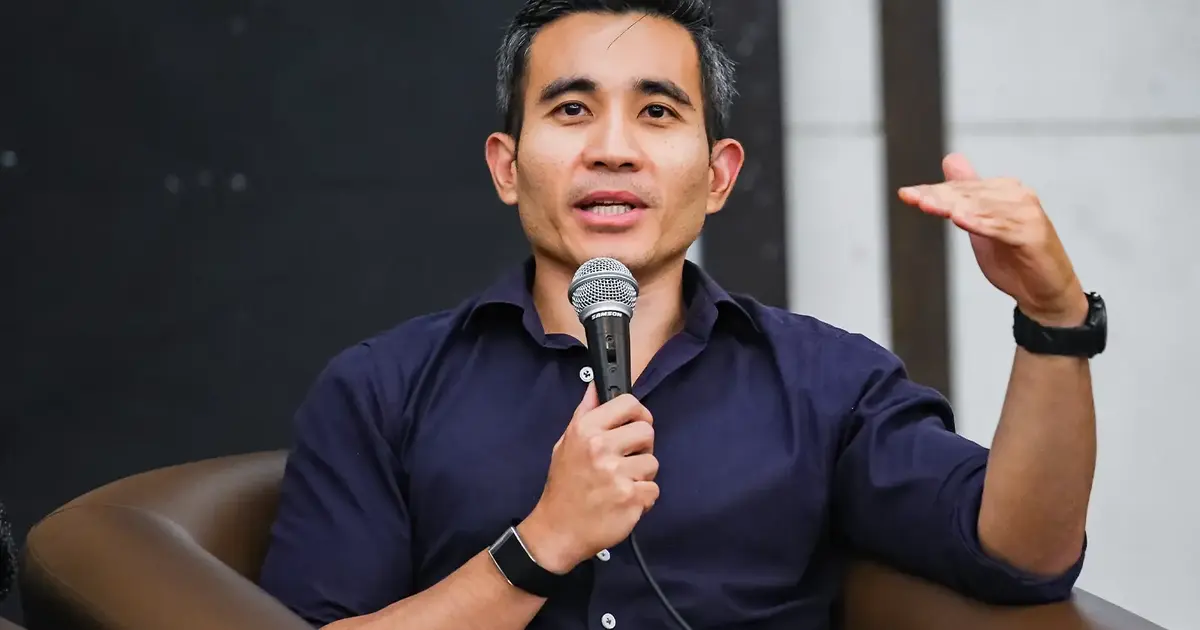
Malaysia's upcoming general election is shaping up to be a campaign characterised by practical rather than inspirational political messaging, according to Shahril Hamdan, a former senior communications strategist for Umno. His assessment reflects growing scepticism about whether any of the country's major political coalitions possess the credibility or capacity to articulate compelling narratives that might genuinely reshape the nation's trajectory across economic, social, or institutional domains.
Shahril's observation arrives at a critical juncture in Malaysia's political cycle. Voter sentiment across the country appears increasingly defined by fatigue with established parties and their track records, even as alternative political forces struggle to consolidate coherent platforms. This dynamic creates a peculiar electoral environment where the absence of transformative messaging may actually reflect deeper structural limitations within Malaysia's political establishment rather than a temporary campaign weakness.
The notion that no major political party can credibly promise substantial change warrants careful examination, particularly given Malaysia's recent political history. The country has witnessed three consecutive general elections since 2018, each delivering unexpected outcomes that scrambled conventional political calculations. Umno, despite its dominance across several decades, saw its stranglehold on federal power broken in 2018 before returning to central government through a complex coalition arrangement. Pakatan Harapan, which initially presented itself as a transformative force, faced internal contradictions and governance challenges that undercut its reform narrative. Perikatan Nasional, the relative newcomer to national coalitions, has positioned itself variously as an alternative, though without demonstrating the institutional capacity to execute systemic overhauls.
Shahril's characterisation of anticipated GE16 narratives as "uninspiring but functional" captures an important nuance. Voters may ultimately prefer straightforward, achievable commitments—addressing cost-of-living pressures, maintaining economic stability, or delivering targeted improvements to public services—over grandiose promises that stretch credibility. This represents a maturation in electoral expectations, where functionality outweighs inspirational rhetoric. Yet the implications for Malaysia's long-term political health merit consideration, as functional campaigns alone rarely mobilise the kind of civic engagement necessary for sustained institutional reform.
The Malaysian electorate itself has evolved considerably. Urban voters, particularly younger demographics, increasingly demand policy substance over symbolic gestures. Rural constituencies, traditionally more aligned with Umno-led coalitions, face distinct economic challenges that demand specific rather than visionary solutions. The growing diversity of voter priorities across different regions and demographic groups makes it extraordinarily difficult for any single political coalition to construct a unified, genuinely transformative narrative that resonates authentically across Malaysia's complex social landscape.
For foreign observers and regional analysts, Malaysia's approaching electoral mood carries implications beyond its borders. Southeast Asia's largest economy faces structural challenges—from workforce competitiveness and industrial diversification to managing geopolitical pressures—that arguably demand forward-thinking political leadership. If GE16 unfolds primarily within a framework of incremental improvements and maintenance politics, it may signal that Malaysian political actors view systemic transformation as either infeasible or electorally unrewarding. This could influence how international investors and regional partners assess Malaysia's capacity for medium-term strategic repositioning.
The commentary from Shahril, himself a veteran operator within Umno's communications apparatus, carries particular weight because it reflects insider understanding of how Malaysia's largest Malay-Muslim political party currently views its messaging strategy. Umno is evidently not positioning itself as a revolutionary force capable of reimagining the Malaysian state, but rather as a steward capable of managing existing systems and delivering modest improvements. This positioning may reflect pragmatic calculation, recognising that Umno's base value proposition rests on administrative competence and communal representation rather than ideological dynamism.
Pakatan Harapan faces a different challenge. Having positioned itself as an agent of transformative change in 2018, the coalition's subsequent governance record became a liability. Policy reversals, internal conflicts over constitutional matters, and administrative missteps created a credibility gap between its campaign promises and actual governance outcomes. Any attempt to resurrect transformative narratives now confronts this historical record, making such messaging vulnerable to accusations of disingenuousness.
Perikatan Nasional's narrative challenge is equally acute. As a relative newcomer to federal governance arrangements, it must balance assertions of being a fresh alternative against the reality that it incorporates experienced political operators and institutional continuities with the broader Malaysian political ecosystem. Constructing genuinely transformative messaging without demonstrating foundational differences from established coalitions requires a delicate balance that the coalition has yet to convincingly strike.
The functional campaign environment Shahril anticipates may also reflect rational voter calculations. Many Malaysians, fatigued by three general elections in six years and their economic and social reverberations, might preference stability and modest improvements over ambitious agendas requiring sustained risk-taking. This voter disposition would reward parties that make carefully calibrated promises about managing inflation, improving healthcare delivery, or enhancing education quality—rather than those proposing constitutional overhauls or systemic economic restructuring.
Looking ahead to GE16, the electoral contest will likely revolve around competence perceptions, particularistic benefits distribution, and incremental policy commitments rather than broader transformative visions. This represents a specific moment in Malaysia's democratic trajectory where the political establishment appears consensus that voters prefer pragmatism to ideological boldness. Whether this represents a healthy recalibration toward realistic governance expectations or a concerning absence of strategic ambition remains an open question for Malaysia's future trajectory.