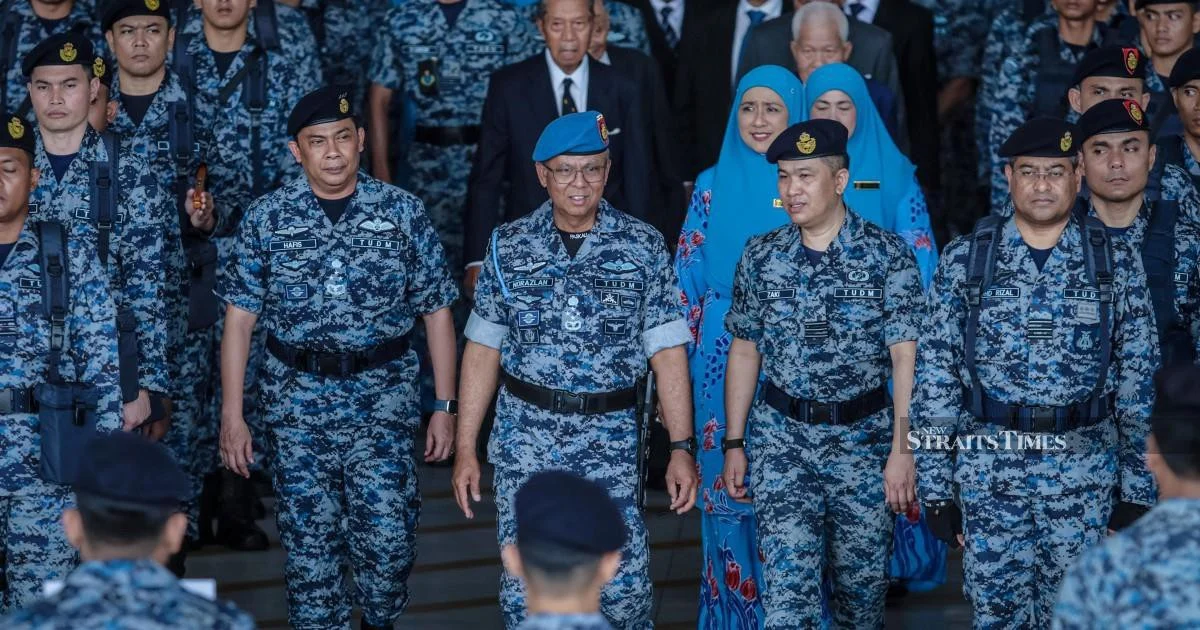
The Royal Malaysian Air Force's top commander has raised alarm about the vulnerability of Malaysia's maritime corridors, emphasising that stronger aerial capabilities have become indispensable in an increasingly complex regional security environment. General Tan Sri Muhamad Norazlan Aris made these remarks during an official address in Subang, underscoring a fundamental shift in how military strategists view protection of the nation's vital shipping lanes. As one of the world's busiest waterways passes through Malaysian territory, the implications of inadequate air cover extend far beyond national borders, affecting regional trade and the global maritime economy.
Malaysia's position as a maritime gateway carries substantial economic weight, with thousands of vessels transiting through its waters annually. The Strait of Malacca alone handles roughly a quarter of global maritime trade, making it crucial infrastructure for neighbouring economies and international commerce. Recent shifts in regional power dynamics have prompted military establishments across Southeast Asia to recalibrate their strategic assessments. The RMAF chief's intervention reflects a deliberate attempt to bring focus to an area that had historically received less attention compared to territorial disputes in the South China Sea.
The evolving geopolitical landscape that General Tan Sri Muhamad Norazlan Aris referenced encompasses multiple overlapping concerns. Rising great power competition, increased naval activity from external actors, and emerging maritime security threats have combined to create a more unpredictable operating environment. Piracy, though reduced from peaks two decades ago, remains a persistent concern in certain waters. Additionally, the potential for accidental escalation or miscalculation in crowded shipping lanes has prompted regional defence chiefs to advocate for greater situational awareness and response capability.
Air power provides several critical advantages in maritime protection that surface vessels alone cannot deliver. Aerial platforms offer superior surveillance range, enabling detection of threats at greater distances and providing early warning capability that is essential for effective response. Fast-moving aircraft can intercept suspicious vessels far more rapidly than ships, and aerial reconnaissance can monitor vast ocean expanses continuously. The RMAF chief's emphasis on this dimension suggests frustration with current capacity constraints that limit Malaysia's ability to conduct sustained maritime surveillance operations.
The timing of these remarks coincides with broader regional military modernisation efforts. Several Southeast Asian nations are acquiring advanced fighter jets, naval vessels, and maritime surveillance systems. Thailand, Vietnam, and Indonesia have all undertaken significant defence upgrades in recent years, creating implicit pressure on Malaysia to avoid falling behind in critical capability areas. The RMAF's existing fleet comprises ageing aircraft alongside newer platforms, creating operational challenges when executing extended patrol missions over vast maritime zones.
Malaysia's maritime challenges extend beyond conventional security threats. Environmental protection, resource management, and enforcement of maritime laws require persistent aerial presence. The RMAF participates in operations against maritime smuggling, illegal fishing, and unauthorised oil extraction in Malaysian waters. Enhanced air capabilities would strengthen these enforcement operations and demonstrate effective sovereignty over claimed maritime zones.
The budgetary implications of the RMAF chief's position warrant serious consideration. Acquiring and maintaining modern air defence systems demands substantial capital investment and sustained funding. Malaysia currently allocates approximately 1.3 percent of gross domestic product to defence spending, comparable to regional peers but constrained by competing national priorities. Strengthening maritime air power would require difficult decisions about defence budget allocation, potentially necessitating reductions in other military areas or domestic programmes.
International partnerships offer one pathway to enhancing Malaysian air capabilities without unmanageable financial burdens. Cooperative arrangements with allies, joint training exercises, and technology-sharing agreements can extend effective reach. Several neighbouring nations have pursued multilateral maritime security initiatives that incorporate air power components. Malaysia could deepen involvement in these frameworks while developing indigenous capabilities over the medium term.
The security implications for Malaysia specifically relate to its dual maritime frontages and the commercial significance of waters under national jurisdiction. The South China Sea disputes, whilst headline-grabbing, represent only one dimension of maritime security concerns. The Strait of Malacca presents distinct challenges that require dedicated attention from defence planners. Enhancing air power capabilities addresses vulnerabilities that exist independent of the South China Sea situation and represents a logical modernisation priority.
For Malaysia's shipping industry and trading partners, the RMAF chief's statement offers implicit assurance that military leadership recognises maritime security as paramount. However, it simultaneously sends a signal that current capabilities may be insufficient. This creates pressure on civilian government to translate military advice into budget allocations and procurement decisions. The commercial sector depends on secure passage through Malaysian waters, and sustained absence of investment could gradually undermine the nation's role as a reliable maritime hub.
Regional observers will interpret the RMAF chief's emphasis on air power within the context of Malaysia's overall defence modernisation trajectory. The statement reflects professional military assessment rather than alarmism, yet it clearly advocates for prioritisation of this particular capability area. Whether civilian policymakers act decisively on this advice will significantly influence Malaysia's capacity to manage maritime challenges throughout the coming decade.

%22%2F%3E%3C%2Fpattern%3E%3C%2Fdefs%3E%3Crect%20width%3D%22100%25%22%20height%3D%22100%25%22%20fill%3D%22url(%23ph3qcoig)%22%2F%3E%3Crect%20width%3D%22100%25%22%20height%3D%22100%25%22%20fill%3D%22url(%23ph3qcoip)%22%2F%3E%3Ctext%20x%3D%2250%25%22%20y%3D%2250%25%22%20text-anchor%3D%22middle%22%20dominant-baseline%3D%22central%22%20fill%3D%22rgba(255%2C255%2C255%2C0.95)%22%20font-family%3D%22Georgia%2C%20'Times%20New%20Roman'%2C%20serif%22%20font-weight%3D%22700%22%20font-size%3D%22226%22%20letter-spacing%3D%22-0.02em%22%3ESenior%3C%2Ftext%3E%3C%2Fsvg%3E)
%22%2F%3E%3C%2Fpattern%3E%3C%2Fdefs%3E%3Crect%20width%3D%22100%25%22%20height%3D%22100%25%22%20fill%3D%22url(%23ph3r5jwg)%22%2F%3E%3Crect%20width%3D%22100%25%22%20height%3D%22100%25%22%20fill%3D%22url(%23ph3r5jwp)%22%2F%3E%3Ctext%20x%3D%2250%25%22%20y%3D%2250%25%22%20text-anchor%3D%22middle%22%20dominant-baseline%3D%22central%22%20fill%3D%22rgba(255%2C255%2C255%2C0.95)%22%20font-family%3D%22Georgia%2C%20'Times%20New%20Roman'%2C%20serif%22%20font-weight%3D%22700%22%20font-size%3D%22320%22%20letter-spacing%3D%22-0.02em%22%3EPAS%3C%2Ftext%3E%3C%2Fsvg%3E)