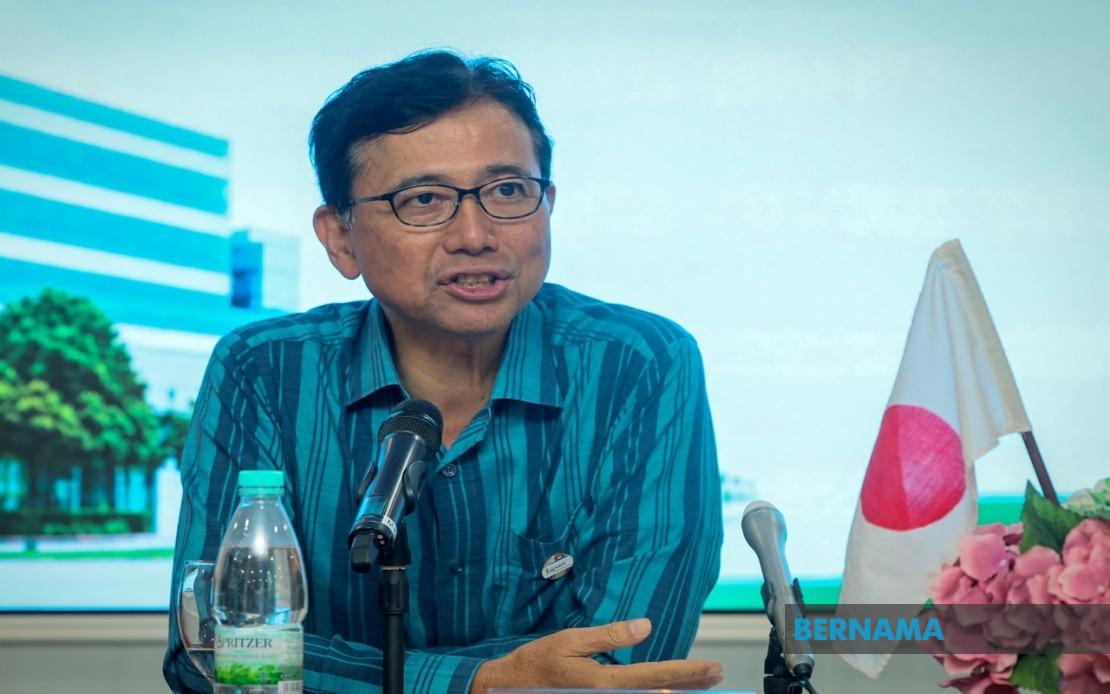
Japanese Ambassador to Malaysia Noriyuki Shikata has highlighted how Tokyo's revamped Free and Open Indo-Pacific framework serves as a natural complement to Kuala Lumpur's push to emerge as a leading technology and digital hub in the region. The updated FOIP agenda, unveiled by Prime Minister Sanae Takaichi in May, represents a significant recalibration of Japan's regional positioning away from traditional frameworks towards concrete economic gains and industrial strength.
Originally introduced by former Prime Minister Shinzo Abe in 2016, the FOIP concept sought to underpin regional peace and prosperity through Japanese leadership and strategic engagement. However, the latest iteration moves beyond these foundational principles to embrace practical cooperation in emerging domains. Ambassador Shikata characterised the updated framework as both pragmatic and substantive, signalling Japan's determination to shift gears from abstract principles towards measurable outcomes in areas including artificial intelligence, secure data management, undersea telecommunications cables and satellite infrastructure development.
The strategic alignment between Japan's vision and Malaysia's own technological aspirations appears especially pronounced. The updated FOIP emphasises collaborative capacity building and knowledge exchange with developing economies across the Global South, an orientation that complements the ASEAN Outlook on the Indo-Pacific adopted by regional member states. This convergence suggests a genuine opportunity for Malaysia to leverage Japanese expertise, capital and technology partnerships to accelerate its own digital transformation journey.
Financial muscle backs these policy ambitions through the POWERR Asia initiative, a partnership framework commanding US$10 billion in dedicated funding. This mechanism specifically targets energy security and supply chain resilience across ASEAN nations, addressing longstanding regional vulnerabilities in fuel procurement, strategic stockpiling and access to critical raw materials essential for advanced manufacturing and technology sectors.
For Japanese corporations operating in Malaysia, the updated framework potentially reshapes the operating landscape. Ambassador Shikata noted that the approach creates a more stable, secure and predictable business environment that encourages Japanese firms to pivot from conventional manufacturing towards high-value technology partnerships and next-generation industrial activities. This transition aligns with Malaysia's own aspirations to climb the value chain and reduce dependence on labour-intensive production models.
Malaysia's established position as a regional semiconductor hub features prominently in Japan's strategic calculus. Japanese companies have signalled keen interest in expanding local footprints across several high-tech domains, including semiconductor packaging technologies, artificial intelligence infrastructure development and cloud computing services. These sectors represent precisely the kind of knowledge-intensive, high-margin activities that Malaysia seeks to cultivate as it repositions itself within global technology supply chains.
The bilateral relationship itself has undergone notable transformation, particularly following the establishment of the Comprehensive Strategic Partnership in December 2023. This formal arrangement transcends the historical Look East Policy framework that defined Malaysia-Japan ties for decades. Instead, it establishes a modern partnership predicated on innovation, technological collaboration and strategic co-creation, reflecting evolved circumstances and mutual interests in an increasingly multipolar Asia.
Recent high-level diplomatic activity has signalled concrete momentum. Prime Minister Datuk Seri Anwar Ibrahim's meetings with major Japanese industrial leaders during his visit to Japan included discussions with Mitsubishi Corporation, ENEOS, DENSO, IBM and Marubeni. These engagements appear designed to crystallise Japan's technological capabilities and investment appetite into concrete sectoral partnerships aligned with Malaysia's industrial development priorities.
Looking ahead, Ambassador Shikata outlined expectations for deepened collaboration between Japanese technological innovators and Malaysia's own technology ecosystem. Joint initiatives in artificial intelligence and quantum computing represent natural early focuses, reflecting both nations' recognition of these fields' transformative potential for economic competitiveness and industrial capability. Parallel efforts to strengthen critical infrastructure protection and supply chain resilience address genuine regional security concerns in an era marked by geopolitical tension and economic fragmentation.
The ambassador's statements underscore Japan's calculated investment in positioning itself as Malaysia's most dependable partner through this transformation phase. This positioning carries implications extending beyond bilateral commerce, affecting Malaysia's broader regional standing and competitive position as Southeast Asia seeks to develop authentic technological sovereignty rather than remaining perpetually dependent on external technology providers.
For Malaysian policymakers and business leaders, the updated FOIP framework presents concrete opportunities to accelerate technology adoption and capacity building while simultaneously strengthening economic ties with Japan. The US$10 billion financial backing provides tangible resources for infrastructure development and institutional capability enhancement, moving beyond rhetorical commitment to substantive engagement.
The convergence between Japan's strategic vision and Malaysia's developmental goals also suggests broader implications for ASEAN cohesion and positioning. As the region navigates complex great power competition and technological fragmentation, frameworks that enhance intra-regional cooperation while facilitating partnerships with committed external actors like Japan offer pathways towards greater strategic autonomy and economic resilience.