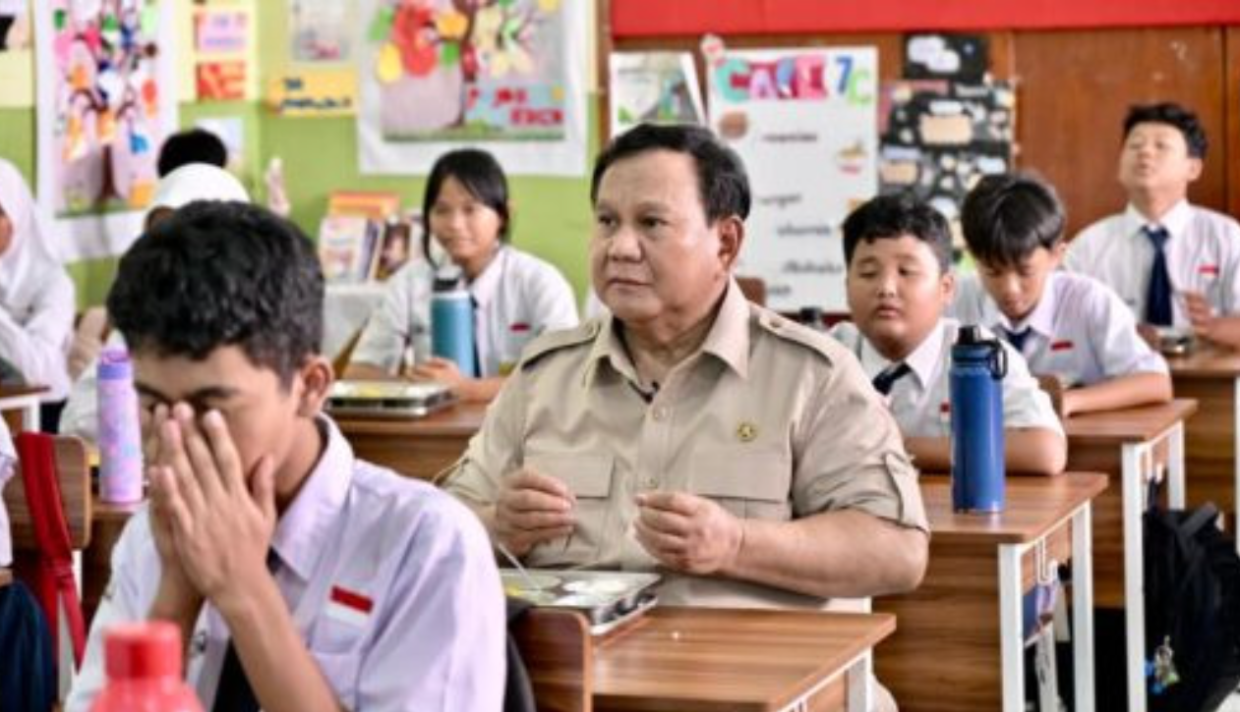
President Prabowo Subianto's signature free nutritious meal initiative has become increasingly contentious as civil society groups, students and a key government watchdog join forces to demand a halt and comprehensive review of the sprawling programme. The pressure campaign represents a significant challenge to one of the new administration's flagship policies, with critics arguing that despite its noble intent to combat childhood malnutrition, the rollout has been marred by systemic failures that undermine rather than advance public welfare.
The National Commission on Human Rights (Komnas HAM) intensified scrutiny this week by formally documenting what it described as strong indications of human rights violations embedded in the programme's implementation. Commissioner Pramono Ubaid Tanthowi outlined a troubling pattern of shortcomings spanning operational ineffectiveness, opaque decision-making processes, recurring contamination incidents that have sickened thousands of children, and inadequate systems for responding to crises and compensating affected families. The commission specifically highlighted alleged breaches of children's fundamental rights alongside systematic violations of broader public entitlements to health, nutrition, reliable information and meaningful remedies for victims.
What distinguishes Komnas HAM's intervention is its structural critique of the expansion strategy itself. Rather than attributing problems solely to implementation gaps that better management might resolve, the human rights body argues that the programme's architecture is fundamentally misaligned with its stated objectives. By pursuing universal coverage that has reached 61 million beneficiaries nationwide by March, the initiative risks diluting resources and attention away from the most vulnerable populations in remote and economically marginalised regions where nutritional deficiency remains most acute. This analysis suggests that achieving measurable improvements in child health outcomes would require a strategic retreat from mass expansion toward targeted concentration on populations with the greatest need.
The student-led protests that erupted last week reflect broader public unease extending beyond technocratic concerns about programme design. University students across Indonesia have taken to the streets demanding government action to suspend operations, signalling that dissatisfaction has reached beyond policy wonks and civil society networks into the general population. This mobilisation matters politically because it demonstrates that the initiative, framed as a compassionate intervention for vulnerable children, has somehow generated sufficient public concern to trigger organised opposition—an unusual outcome for a purportedly popular welfare programme.
Underlying much of the technical criticism are documented food safety failures that have proven both recurrent and severe. Since the programme's launch, thousands of poisoning incidents have been recorded, yet investigation and accountability mechanisms have remained sluggish and ineffectual. Three former National Nutrition Agency (BGN) leaders have already been removed and subsequently named as corruption suspects, suggesting that the problems extend beyond operational mismanagement into potential criminal conduct. These revelations have corroded public confidence in the institutional capacity to deliver safe meals at scale.
Perhaps most consequential are seven separate constitutional petitions now before Indonesia's highest court, filed by teacher associations, civil society coalitions and student groups. These challenges contest the Rp 335 trillion (US$18.86 billion) budget allocation in the 2026 state budget on grounds that it violates the constitutional requirement that 20 per cent of total budget resources be reserved for education. By drawing some funds from the education envelope to finance meals, petitioners argue that the government is effectively cannibalising resources from teacher salaries and school improvements to fund the new initiative. This framing transforms the dispute from a sectoral policy disagreement into a fundamental constitutional question about resource prioritisation and government compliance with existing legal obligations.
Teachers filing testimony before the constitutional court have articulated a particularly poignant argument about the human costs of this budget reallocation. Despite constitutional protections mandating substantial education funding partly to improve educator compensation, many Indonesian teachers remain chronically underpaid. Redirecting education budget resources toward free meals, in this view, represents a choice to expand a new programme at the expense of redressing longstanding injustices toward the teaching profession. Edy Kurniawan Wahid from the Indonesian Legal Aid Foundation (YLBHI), representing petitioners in the constitutional proceedings, has argued that the programme's continued expansion is actively undermining the education system and that implementation should be halted pending a definitive court ruling on its legal basis.
Muhammadiyah, one of Indonesia's largest Islamic civil society organisations, has joined the coalition opposing the initiative, with spokesman Muhammad Busyro Muqoddas contending that the programme has produced more damage than benefit. Beyond procedural criticisms about transparency deficits, Muhammadiyah's position reflects a substantive judgment that the resource commitment cannot be justified by results achieved. The organisation has stopped short of demanding permanent cancellation but has called for at least a temporary suspension coupled with thorough evaluation—a position that many other critics have also adopted as a pragmatic starting point.
The government has nonetheless signalled its determination to maintain the programme, with the Government Communications Agency emphasising that suspending Prabowo's flagship initiative would betray a central campaign commitment. This rhetorical stance privilegises campaign promises over evidence of implementation difficulties, suggesting the administration views the meal scheme as a core legitimacy marker despite mounting criticism. However, this position may become increasingly untenable if constitutional court proceedings advance or if additional food safety crises occur before corrective measures take root.
Response to the mounting pressure has included some gestures toward operational reform, with newly appointed BGN head Nanik Sudaryati Deyang announcing plans for comprehensive kitchen audits during the school break period from mid-June through mid-July. The agency intends to use the operational pause to suspend services, inspect all 27,000 nutrition fulfillment service units nationwide, and overhaul systems for tracking beneficiaries and calibrating resource distribution. BGN deputy head Agustina Arumsari indicated that the current flat Rp 6 million per-kitchen incentive structure will be redesigned to reflect actual beneficiary numbers, and the agency is considering consolidating some catering operations to focus resources more effectively on children with greatest nutritional vulnerability.
These operational adjustments suggest the new BGN leadership recognises that the current programme architecture requires substantial recalibration to address quality and safety concerns. However, critics contend that such modifications address symptoms rather than the fundamental question of whether the constitutional budget allocation and prioritisation framework itself remains defensible. The distinction matters because even optimised operations within a flawed structural framework might fail to achieve intended welfare improvements or resolve the underlying tension between education budget obligations and meal programme funding.
For Malaysia and other Southeast Asian nations observing Indonesia's experience, the free meal programme controversy illustrates broader tensions in designing and implementing large-scale nutrition interventions. Indonesia's case demonstrates that universal coverage mandates, while politically appealing, may sacrifice effectiveness and safety compared to targeted approaches. It also highlights the importance of establishing robust accountability mechanisms and food safety protocols before scaling operations to massive beneficiary populations. Additionally, the constitutional dimension—questions about whether new social programmes should draw from existing earmarked budget categories—merits consideration by other regional governments designing welfare expansions.