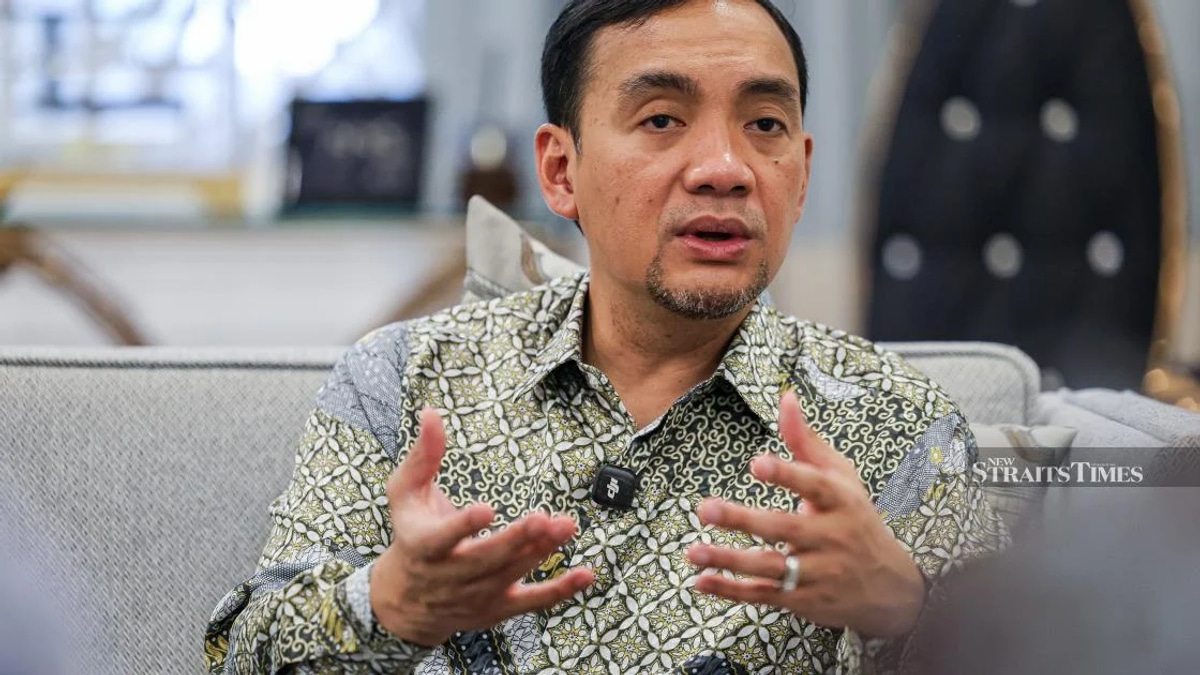
Perikatan Nasional's chief whip has formally informed the Speaker of the Dewan Rakyat that Hamzah Zainudin, the former deputy president of Bersatu, will take on the mantle of opposition leader with immediate effect. The announcement, communicated through official parliamentary channels by Takiyuddin Rahman, marks a significant realignment within Malaysia's opposition landscape and underscores the consolidation of PN's influence in parliament following the recent political shifts in federal governance.
The appointment carries the backing of 61 opposition members of parliament, a substantial bloc that demonstrates the cross-party coordination within the PN alliance. This numerical strength positions the coalition as a formidable parliamentary force and signals the completion of internal arrangements within PN regarding its representation and strategic direction in the lower house. The coordination required to achieve such consensus among MPs from multiple parties within the opposition alliance reflects both the complexity and pragmatism of Malaysia's contemporary political alignments.
Hamzah Zainudin's elevation to the opposition leader post represents something of a political rebound for the Bersatu veteran. His previous tenure as deputy president within his party and his involvement in Bersatu's tumultuous political journey provide him with institutional knowledge of both party mechanics and coalition dynamics. The timing of his appointment as opposition leader coincides with broader strategic considerations within PN regarding how the coalition should position itself vis-à-vis the ruling government and parliamentary proceedings.
The formal notification to the Speaker carries procedural and symbolic weight within Malaysia's Westminster-influenced parliamentary system. The opposition leader designation provides Hamzah with official recognition, enhanced speaking rights, parliamentary protocols, and a defined role in parliamentary business and opposition questioning of government policies. This institutional legitimacy is particularly significant given the fluid nature of Malaysian politics, where formal recognition often translates into substantive influence over parliamentary agenda-setting and opposition coordination.
For Malaysian and Southeast Asian observers, this development illustrates the continued reconfiguration of opposition politics in the region's largest non-communist democracy. PN itself represents a relatively recent political formation, having emerged from specific historical circumstances and party realignments. The appointment of Hamzah to lead its parliamentary representation suggests that PN leadership believes the coalition requires a recognizable face in the opposition leader role, someone with parliamentary experience and factional standing within the broader alliance.
The 61-MP backing signals that Hamzah's appointment achieved the requisite support without requiring consensus from every opposition member. This suggests that while PN maintains sufficient cohesion to command this majority, there may be nuances within opposition ranks regarding strategy and direction. Such complexity is typical of Malaysian opposition coalitions, which often comprise parties with divergent ideological orientations and organisational interests held together by tactical opposition to the ruling government.
The parliamentary opposition leader position carries particular importance during budget deliberations, motion debates, and the annual parliamentary cycle. Hamzah's assumption of this role means he will be the primary orchestrator of opposition responses to government legislative proposals and policy announcements. His effectiveness in this capacity will significantly influence how PN shapes the parliamentary narrative and holds the government accountable on behalf of the opposition benches.
Within the broader context of PN's political trajectory, this appointment reflects the coalition's ambition to function not merely as a marginal opposition force but as a substantive alternative parliamentary presence. The allocation of the opposition leader role to a Bersatu member underscores the continuing dominance of that party within the PN structure, though the multi-party support required for Hamzah's appointment indicates that other PN members have acquiesced to Bersatu's leadership.
The notification to the Speaker represents the formal conclusion of internal PN negotiations regarding its parliamentary leadership structure. Such internal processes, while often opaque to external observers, determine how opposition parties allocate influence and resources. The fact that PN felt compelled to formalize Hamzah's appointment through official parliamentary channels suggests a degree of confidence in this arrangement and a desire to establish clear parliamentary protocols around opposition representation.
Looking forward, Hamzah's tenure as opposition leader will be tested by his ability to maintain coalition discipline on key votes, articulate a coherent opposition vision on major policy issues, and effectively scrutinize government performance. The sustainability of his leadership will depend partly on whether PN's 61-MP bloc remains stable and partly on the political developments affecting his own standing within Bersatu and the broader opposition alliance.
The appointment also carries implications for other opposition figures who may have aspired to the leadership position. The clear designation through formal parliamentary notification suggests that PN has foreclosed alternative candidacies and established a settled leadership structure. This clarity can facilitate opposition coordination but may also create tensions if ambitious politicians feel sidelined from the premier opposition leadership platform.
For Malaysian governance more broadly, Hamzah's ascension to opposition leader represents the ongoing maturation of PN as a parliamentary force. The coalition's ability to command 61 votes and formalize its opposition representation indicates that it has moved beyond nascent political formation status toward functioning as an institutionalized opposition bloc. How effectively it executes this role during the current parliamentary term will influence both its electoral prospects and its influence over the government's legislative agenda.